Showing posts with label geography. Show all posts

Monday, July 13, 2015

Dhaulagiri - no love for 7th place


Dhaulagiri I  is the 7th tallest mountain in the world at 8167 meters tall, but back in 1808 it was the tallest mountain yet surveyed. It wasn't until 1838 that Kangchenjunga got first place followed by Everest in 1858.

The name Dhaulagiri means "white mountain" or "dazzling white beautiful mountain". A Swiss expedition was the first to reach its peak in 1960 (that's 7 years after the first ascent of Everest).

Like most of the tallest mountains on Earth, it is located in Nepal. In fact, of the 10 highest mountains on Earth, 9 are in Nepal. The defector is K2, the second highest mountain, which is in China.


Sunday, July 5, 2015

desert processes - there's a history behind every crazy looking rock


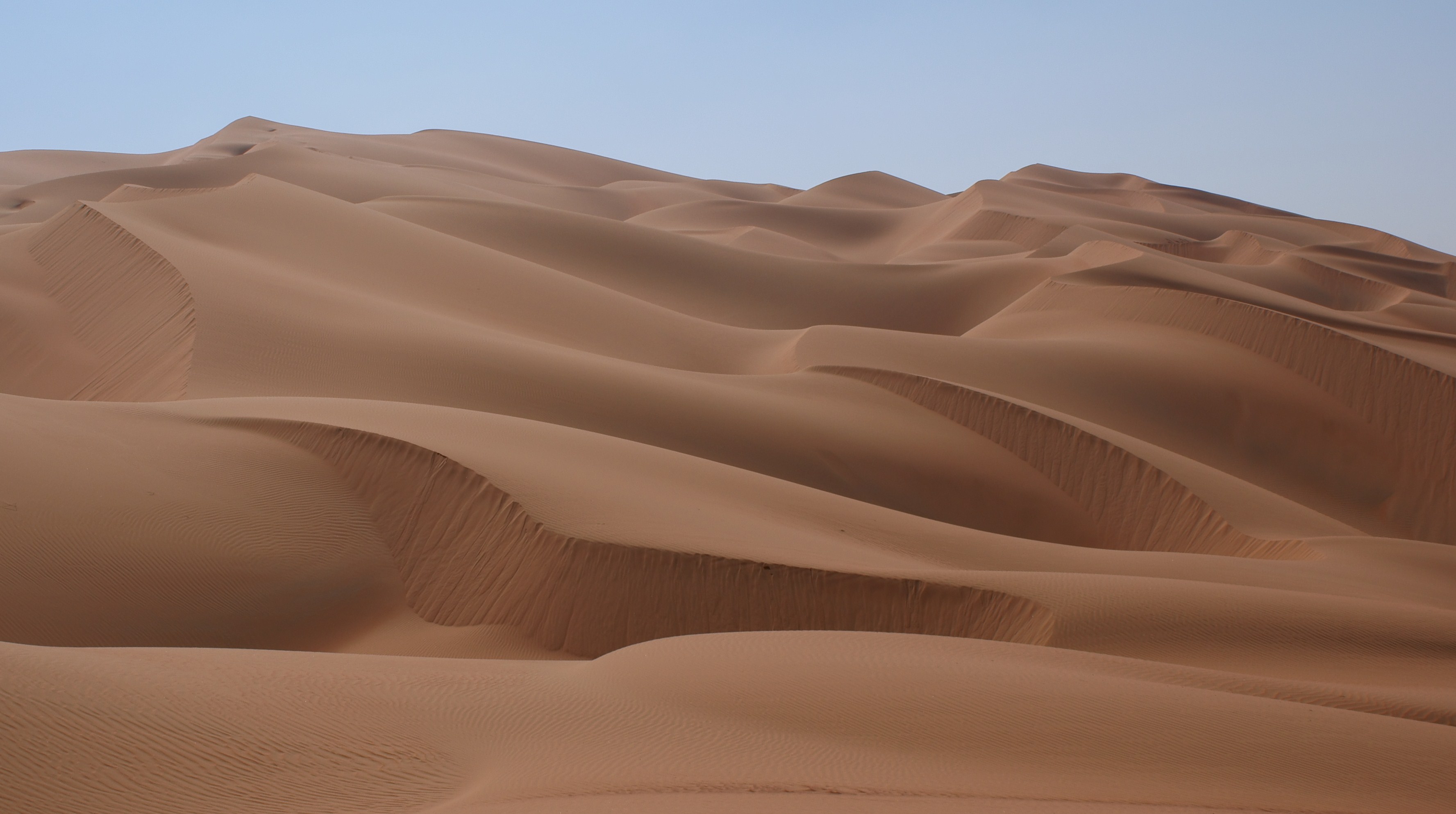
The picture above is what most people think of when they think of deserts. However, wind blown sand only makes up 2% of North American deserts, 10% of the Sahara, and 30% of the Arabian desert.

There are many processes that create geological structures. What follows is a quick selection of them, particularly ones that are in play in the desert.

glaciofluvial deposits along Matanuska River, Alaska
Fluvial processes refers to deposits and landforms created by rivers and streams. Of course, deserts generally don't have permanent rivers, but sudden rain storms do occur in deserts and that water can change the landscape.
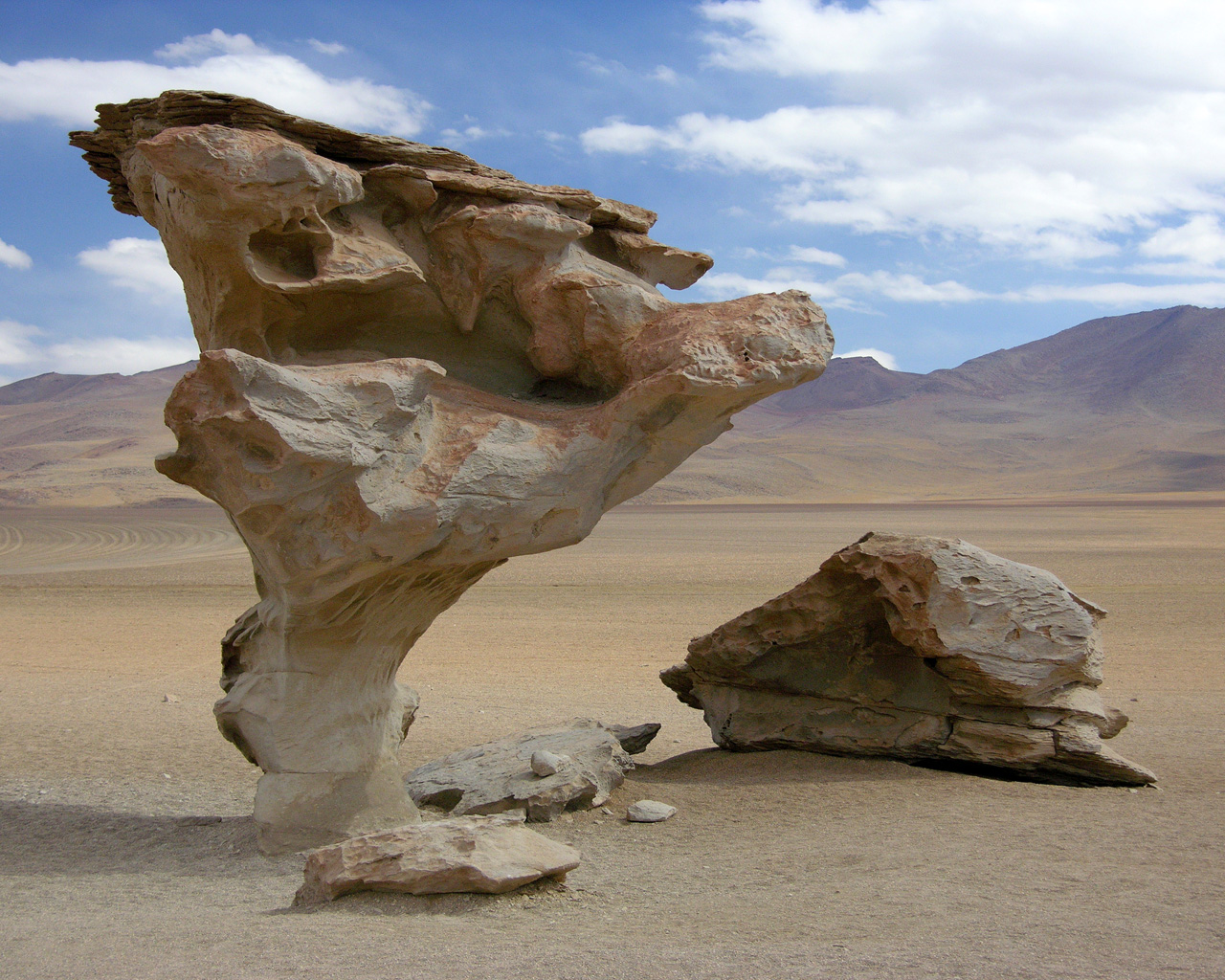
rock sculpted by wind in Altiplano region of Bolivia
Aeolian processes refer to wind's ability to erode, transport, and deposit materials.


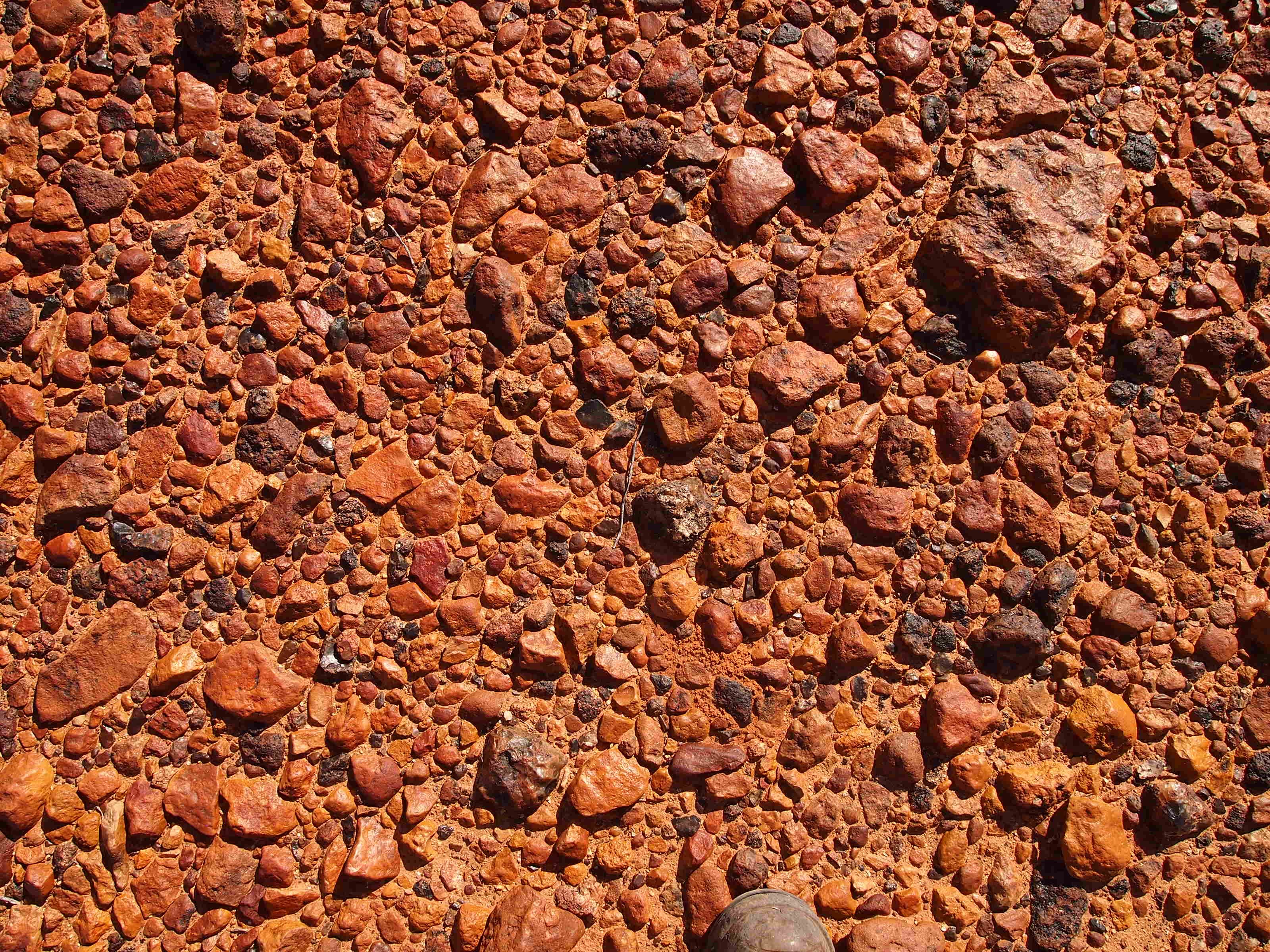
Desert pavement is a desert surface composed of interlocking rocks. It looks like the land was run over by a steamroller. There are multiple theories about how the pavement forms, but I find the most recent theory fascinating. In the given example, we start out with a lava flow then, over time, dust is deposited, but due to "heave" (which I think means shaking about by wind), all loose rocks move upward as new dust is added. The result is that helium-3 dating of the rocks shows that the dust under the rocks is actually much newer than the rocks on the top. Furthermore, there are no rocks in the dust underneath because they have all migrated to the surface.


Desert pavement is often coated in desert varnish, but desert varnish can occur on anything that sits on exposed rock surfaces for long periods of time. It only occurs in an area where there is no frequent precipitation, fracturing, or wind abrasion. However, the varnish requires wind to deposit clay on the surfaces to be varnished, so presumably that means the wind must be relatively mild.

The varnish contains a large amount of wind deposited clay which acts as a substrate to catch additional substances that chemically react together in high temperatures. Wetting by dew is also involved.

The resulting varnish contains a high concentration of manganese which is significant because it only makes up 0.12% of Earth's crust by weight, but it's 50 to 60 times more abundant in varnish. One theory for why this is involves manganese-oxidizing microbes.

Sunday, June 28, 2015

Deutschlandied (German national anthem) - Germany above all else


The German national anthem Deutschlandied was written in 1848, but it was not adopted as the national anthem of Germany until 1922. Originally the first verse was supposed to be a call to unity, but its connotations were a bit different under Nazi Germany. Here is the first verse in English:
Germany, Germany above all things,
Above everything in the world,
when, for protection and defense,
it always stands brotherly together .
From the Meuse to the Memel,
From the Adige to the Belt,
|: Germany, Germany above all things,
Above everything in the world! :|
There are 4 places mentioned in that verse, but only the Belt and the Memel were ever actually boundaries of Germany. As of 1920 the Belt was no longer in Germany. As of 1945 the Memel was no longer in Germany. So, post 1945, none of those 4 locations is actually in Germany.

When Germany was split up, West Germany eventually decided (in 1950) to switch from the 1st to the 3rd verse as the official anthem. It sounds a little less take-over-the-world-ish:
Unity and justice and freedom
For the German fatherland!
Let us all strive for this purpose
Brotherly with heart and hand!
Unity and justice and freedom
Are the pledge of happiness;
|: Bloom in the glow of happiness,
Bloom, German fatherland! :|
The verses above are wikipedia's translations. The translation in Britannica of the above verses looks a little different:
Germany, Germany above all,
above all else in the world,
When it steadfastly holds together,
offensively and defensively, with brotherhood.
From the Maas to the Memel,
from the Etsch to the [Little] Belt,
Germany, Germany above all,
above all else in the world.

Unity and rights and freedom
for the German fatherland.
Let us strive for it together,
brotherly with heart and hand.
Unity and rights and freedom
are the basis of good fortune.
Flower in the light of this good fortune,
flower German fatherland.

Tuesday, June 23, 2015

Deseret - the waterless land of milk and honey and ice cream


Back in 1849 a provisional state called Deseret unofficially existed in the United States for about 2 years. Looks like they wanted most of Nevada and parts of most other surrounding states. But, eventually they just had to settle for what is now Utah.

The word "deseret" means "honeybee" in the Book of Mormon, so it could be added to the plentiful puns that exist regarding desert and dessert.

Friday, June 19, 2015

Derby - a town in the shire

Low Tide in Derby

Derby is a town in the Kimberley shire of Western Australia that has a tidal range of 35 feet. I took a look at the google street view, but I was unable to find Hobbiton anywhere. If you can find it, let me know.

So how can the tidal range be 35 feet (vertical)? In the open ocean, the vertical tidal range is only about 2 feet. Does the moon's lovely attraction pull harder on the water in some areas of the Earth? To find out what's going on we can take a look at the Bay of Fundy. It has the highest tidal range in the world at 53 feet.

There's a whole page explaining why Bay of Fundy tides are the highest. Basically, the bay acts as a funnel with a natural oscillation period of between 12 and 13 hours. This happens to match up with the Atlantic ocean tide flooding which occurs every 12 hours and 26 minutes. This results in resonance just like pushing on a swing does for the swinger. If you changed the shape of the bay, the tides wouldn't be as high.

The Derby visitor centre has plenty of other beautiful stuff about Derby on it. My favorite thing about the place is the Boab Prison Tree. I just love crazy looking trees:

Boab Prison Tree


Saturday, June 13, 2015

Denmark - the Britain of the North


Denmark is the location of Copenhagen, the current capital of Denmark, the Faroe Islands, and Greenland. It is also the former capitol of Norway, Iceland, much of Sweden, and part of Finland.

The height of Denmark's control was in 1397 when all those countries were under the control of Margaret I. The was referred to as the Kalmar Union.

As a result of the Stockholm Bloodbath, Sweden officially seceded in 1521. Denmark lost Skåneland to Sweden 1658, but then got it back in 1660. Norway left in 1814. Iceland was granted limited independence in 1874 which was expanded in 1904.

I love aquariums, so let me give a shout out to Denmark's national aquarium. It was opened in 1939 and as of 2013, has 450 unique species and 20,000 total animals. I can't read Danish, but thankfully they have an English version of their site.