Showing posts with label archaeology. Show all posts

Thursday, July 2, 2015

Devonian - long years, short days

The Devonian covers the Earth's history from 419 to 359 million years ago. The world was a little different back then. The picture above shows the continents at the time. I find it essentially unrecognizable.

At the time, days lasted about 21 hours, but there were about 400 of them each year. I don't know how exact those numbers are, but that indicates 8400 hours a year compared to 8766 hours a year now. My guess is that the 400 is a rough estimate. I wasn't able to find a wikipedia article on deviation of the length of the Earth's revolution about the sun, but some quick googling turned up discussions about how the revolution about the sun is slowing, but at a very slow rate compared to changes in Earth's rotation.

The Earth's rotation is slowing over time, largely due to the dragging effect of the Moon's tides. However, there are occasional events like the 2004 Indian Ocean earthquake which increased Earth's rotation by a full 3 microseconds.

On a side note, it's fascinating that the historical view that the heavens rotate about the Earth was not without controversy. Even in the time of the ancient Greeks there were some who argued that the Earth rotated. The counterargument was that if the Earth rotated, the world would be destroyed by high winds.

The Devonian had its share of extinction intensity increases.


At the beginning of the Devonian the largest land organism was a fungus that stood 8 meters tall. By the middle of the Devonian plants developed roots and leaves, so now the land looked something like this:


The following shows the evolution of animals over geologic time. Note that the Devonian is the age of the fishes. According to this graph, before that period there wasn't nearly as much variety in the oceans. The end of the Devonian is the rise of the tetrapods.


Time goes from the bottom to the top in that graph. The width of each line shows the preponderance of that form of life during that period of time.


Thursday, June 18, 2015

dentists used cocaine and plaster


I'll continue on with the dental theme here. If you read the previous article on dental drills you'll be squirming in your seat just thinking about the pain. Thankfully, it's not quite so bad these days.

Anesthesia and analgesia was introduced at the end of the 1800's. Interestingly, cocaine and nitrous oxide were used.

ivory dentures from 1700's
These days dentists can create extremely realistic looking teeth which can be integrated into the jaw bone using a titanium base. Titanium will actually bond to bone, so it's a good material to use when trying to attach things to bone. The bonding process is called osseointegration.

But in the old days, dentures were your only option. Impressions were taken using plaster which needed to be chipped away (painfully) and then reassembled to make a mold. I can't imagine how unpleasant it would be to have a mouth full of wet plaster.

Dentures were made of wood, ivory, or tortoise shell. The teeth were made of ivory or porcelain.

Wednesday, June 17, 2015

Dental Drill - OMG, the pain!

foot powered dental drill

My teeth hurt a little bit just reading about this. The first dental drills were hand cranked. Just imagine a dentist trying to drill a tooth using a drill the same way you might use a hand turned egg beater. I saw Dances With Wolves and the way that they cut off limbs without any anesthetic. Imagine someone doing that, but for teeth. I'll bet they had people hold that poor sucker down while he screamed in agony. Oof! You might want to take a deep breath.

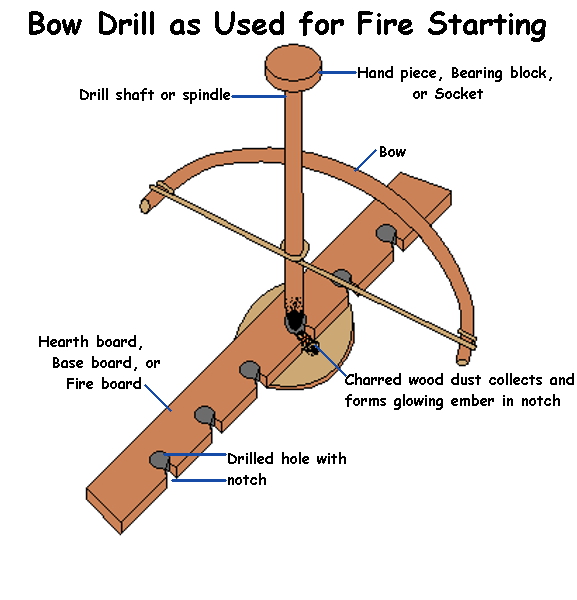
Dentistry actually goes back much farther than that though. There is evidence that in 7000 BC the Indus Valley Civilization (now known as India and Pakistan) drilled cavities using a bow drill. This seems like an astonishing modern thing to do. I always assumed that back then they'd just yank out the tooth if it hurt.

A bow drill wouldn't spin particularly fast though. The slower the speed, the longer the suffering lasts. In 1914 electric dental drills could reach 3000 rpm. Modern drills operate between 400,000 and 800,000 rpm.

That seems like a lot. 800,000 rpm is 13,333 rotations per second. If you're watching TV while the dentist bores into your teeth, in the time it takes for a single frame to display on the TV, the drill has rotated between 200 and 300 times.


Friday, June 5, 2015

Bayeux Tapestry - not a tapestry, but at 230 feet it can call itself whatever it wants

The entire Bayeux Tapestry

The Bayeux Tapestry is not a tapestry and was not created in Bayeux. A tapestry is a textile that has the image woven into it whereas the Bayeux Tapestry is actually an embroidered cloth. It was originally created in England.

Bishop Odo had a long graphical story to tell, but was constrained by the total lack of a comic book industry in the 1070's. The text is written in Latin, so it would be a pretty niche comic anyway, but being unable to read this thing is reasonably realistic given that most people were probably illiterate in the early, mid, and late 1000's anyway.

This not-tapestry was first referenced in a 1476 inventory of Bayeux Cathedral. It was later referenced in the Simpsons couch gag for E Pluribus Wiggum (2008). In 2012 there was another Simpsons episode Moe Goes from Rags to Riches which is about a similar very long tapestry which eventually became Moe's bar rag. The real one fared better. It appears to be missing up to 21 feet at the end, but the rest survived in good condition and is currently an exhibit in a museum in Bayeux.


Monday, June 1, 2015

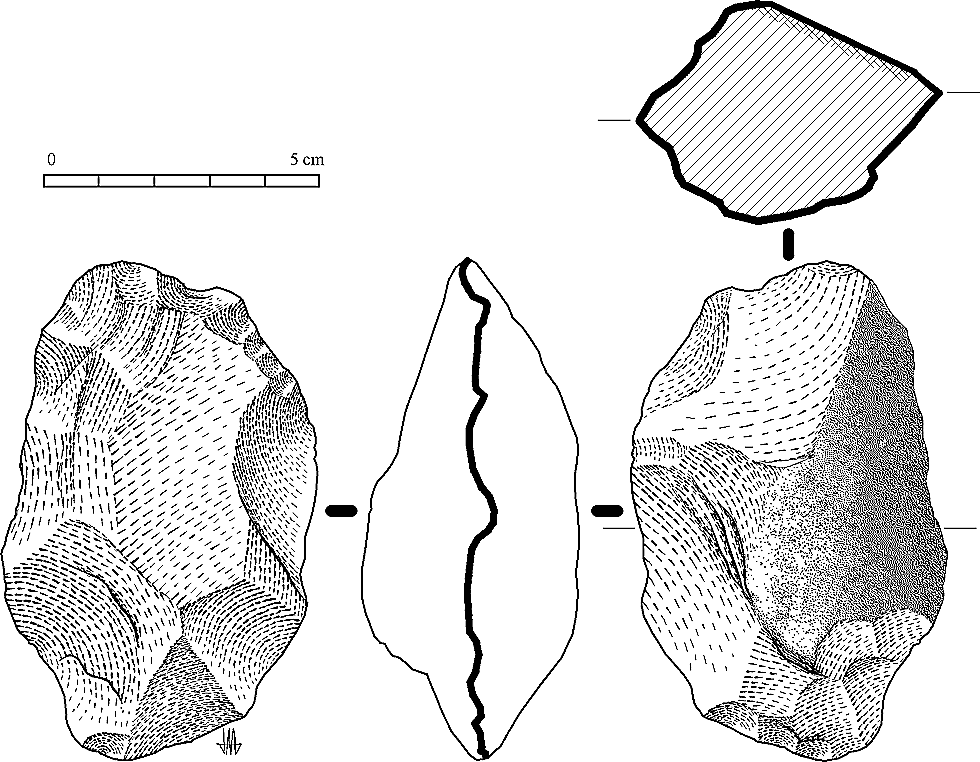
Abbevillian Industry - est. 700,000 BC


Abbevillian Industry refers to a tool tradition that includes the oldest sets of European stone tools ever discovered. They are estimated to come from about 700,000 years ago. This name is apparently an obsolescent name. They are currently referred to as Odowan.