Showing posts with label concept. Show all posts

Wednesday, July 8, 2015

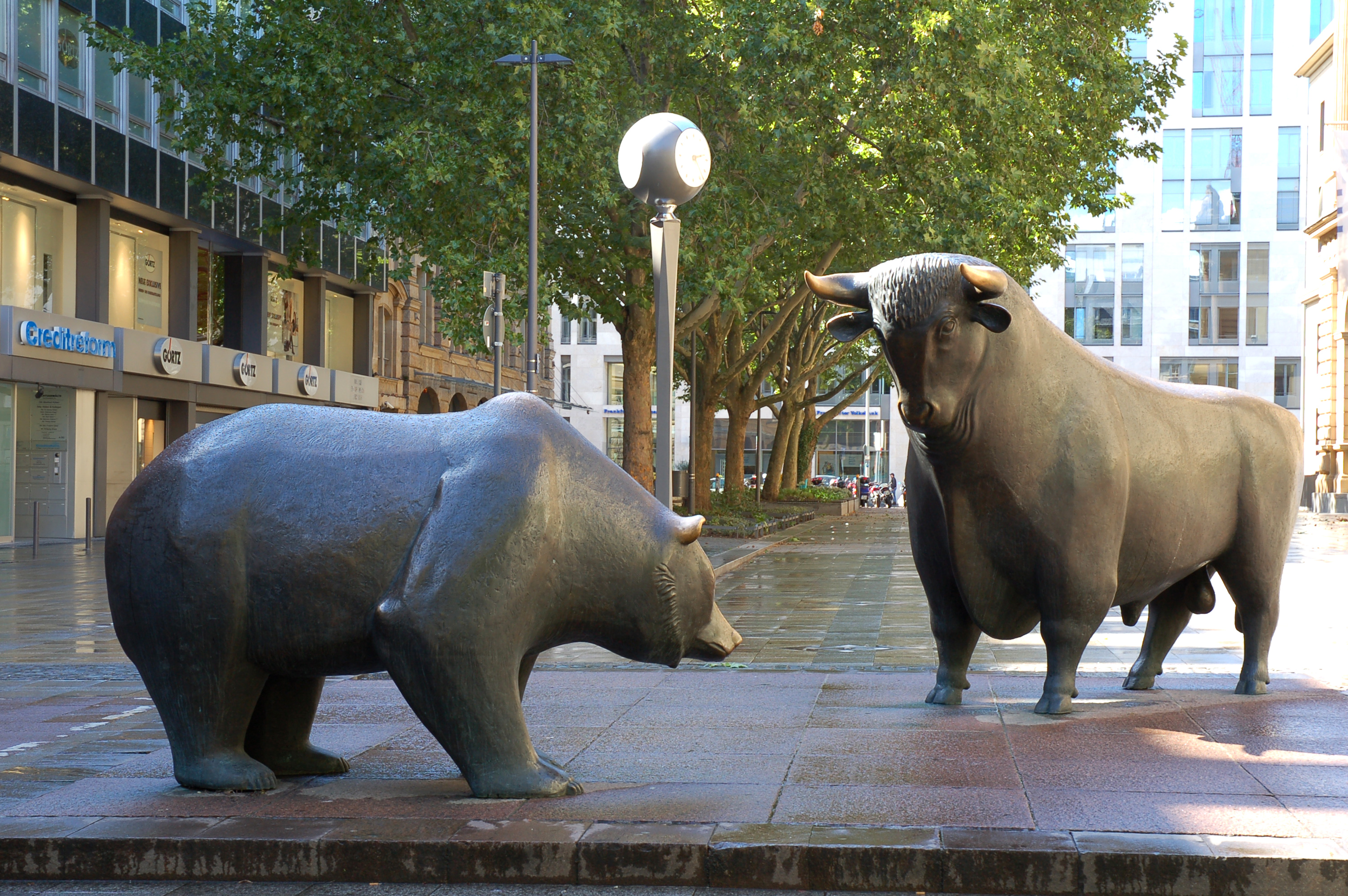
bear market - don't sell the bearskin before you've killed the bear


The etymology of "bear market" is not certain, but a plausible explanation involves a time in the 1700's when London bearskin "jobbers" would sell bearskins in advance of actually catching them. This goes against the proverb "don't sell the bearskin before you've killed the bear".

By 1721, the bear was associated with short selling because the jobbers would intentionally sell skins they didn't own in anticipation of falling prices later. They'd then buy the skins when the prices fell and give them to the folks that already purchased the skins from them at the higher price.

If market prices are going down then the bear skin sellers would make a profit. It's easy to see how a declining market would then be considered a bear market.

Wednesday, June 3, 2015

How to do celestial navigation - GPS didn't always exist


Celestial navigation is how you find your location if you are unlucky enough to live in an era before GPS or if you're in a war zone and the enemy is jamming your signals.

To do it well, you need the following:
  • a sextant
  • a marine chronometer
    • This needs to be very accurate. For every 4 seconds it is off of UTC, your position will be off by one mile.
  • a non-cloudy sky with one of the following
  • a marine almanac which gives schedules for the locations of celestial objects
  • sight reduction tables (these help with the computations so that only addition and subtraction are required)
  • a chart of the region
Now take the following steps (see Altitude-Intercept Method):
  • Find the altitude above the horizon of the celestial object (sun, moon, or star) using the sextant as instructed in this video (or the animated image above). As soon as you find the altitude, record the current time (to the second).
  • Look up the sun's position in the almanac.
  • Pick an assumed position (a rough estimate of where you think you might be).
  • Refer to the sight reduction tables to find out how far off you are from where you think you are.
  • This should allow you to determine your exact current position.

The following gives an overview of the entire process:


And this one actually gets into the nitty gritty:


 MISC:
  • celestial sphere
    • the surface of the heavens as seen from Earth.
  • celiac disease
    • alleviated by low gluten diet. (Apparently there is at least one real condition associated with eating gluten.)
  • La Celestina
    • Greatest work of early Renaissance in Spain. Involves a disastrous love affair. At first I assumed it would be a Romeo and Juliette type of love affair, but it turns out that there are more deaths and only one of the people commits suicide.

Saturday, May 30, 2015

A priori, this title has 14 words. A posteriori, this title may cause confusion.


A priori knowledge is what you know without having to experience anything whereas a posteriori knowledge is knowledge derived from experience (empirical evidence).

How can anyone really know anything? That's a difficult question that philosophers have pondered since the ancient Greeks. Well, probably before then, but you don't get credit for anything unless you write it down for future generations to know. Even then, if you used paper you had better hope there are monks out there that want to duplicate your stuff until the printing press comes along.

Back in college I loved thinking about this sort of thing. I took a class in Philosophy of Science (I highly recommend that class for every person who intends to vote or think.) and enjoyed it so much that I got a minor in it.

Philosophy is basically math without numbers. It's where you go when you want to get meta about anything. If you want to know the atomic weight of calcium then you should ask a chemist or a physicist. If you want to know whether to believe the chemist or physicist then you go talk to a philosopher.

Quis custodiet ipsos custodes? (or would it be Quis custodiet philosophis dixit?) Well, if you want to know whether or not to believe a philosopher, you'll just have to ask other philosophers until you are satisfied. If you're still not satisfied, you can always ask a politician. They're always happy to tell you what you want to hear.

Tuesday, May 26, 2015

abbrev. snafu


Somehow, the idea that abbreviations were invented, just seems odd. But, I suppose every concept had to be thought--by someone--for the first time. We even have a name for that someone. Actually, he probably didn't invent the concept, but he appears to be the earliest user important enough to be mentioned in encyclopaedia entries on abbreviations.

Marcus Tullius Tiro was apparently a slave in Cicero's household sometime around 50 BC. Britannica says that many of his abbreviations are still in use today. Wikipedia indicates he might have been the first to record Roman speeches in shorthand.


The entry for abbreviation defines snafu as "situation normal, all fouled up". This is not the definition I had heard...

I took a gander at etymonline and it seems to indicate the term originally came from the military and was indeed not a polite term. I was wondering if Britannica did this on purpose or not (this is, after all, the entry on abbreviation, not the entry on snafu).

Nevertheless, I searched a bit, and found that the entry on slang recognizes that "fouled" is used to soften the shocking power of the term. Of course, the birds and the bees isn't just about fowl. It's about the bees too, but "situation normal, all flowerbuggered up" just isn't appropriate in polite company.


On a different note, I was just comparing the online Britannica entry for abbreviation with the entry in the paper encyclopaedia that I'm reading. The online entry isn't too much longer than the paper entry, but it certainly is a lot harder to read. It makes me sad that Britannica requires a subscription in order to get rid of all the visual clutter. If they need ads, they should be text-only google ads. OTOH, the wikipedia entry is clear of visual clutter, but it's about 6 times longer. That's great for research, but it's not great when you're just looking for an overview into all the world's knowledge.

I can't decide if the first paragraphs of a wikipedia article are enough. They are summaries. Reading just that text might be enough, but paper Britannica is a compromise between a summary and a full detailed wikipedia entry. I guess future encyclopaedia readers will have to make do. Someone should create an app that allows you to page through wikipedia, a-z, excluding non-notable articles, displaying just the summary text. Heck, maybe I'll make the app if it doesn't already exist. Sounds like a good project.

It would probably be more useful than my mymindblewup.com website which allows you to learn important facts like how many cows are required to bridge the gap between the Earth and the moon.


MISC

  • Abbate, Niccolo dell
    • Artist in 1500's France. Principle contributor t othe Fountainbleau style.
  • Abbe, Ernst
    • 1800's German scientist. Improved lenses. Discovered "Abbe sine condition" formula which is used when making lenses. Improved microscopes.
  • abbess
    • Female abbot.
  • Abbeville, South Carolina, USA
    • Cradle and grave of the confederacy.
  • abbey
    • A set of buildings built around a monastery. Basically small town.
  • Abbot, Charles Greeley
    • In 1953 discovered connection between solar radiation and long term weather patterns.
  • Abbot, Bud and Costello, Lou
    • Comedy act. They originally operated burlesque houses. Well known for "Who's on First." skit.