Showing posts with label biography. Show all posts

Tuesday, August 4, 2015

Didius Julianus - Roman emperor for 9 weeks

Money and politics have always gone hand in hand, but usually there is at least a pretense that it is about something else. Not so in this case.

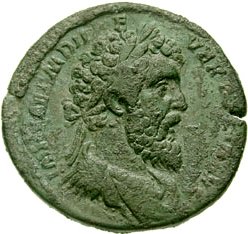
Didius Julianus was a Roman senator who won an auction to become emperor. The Praetorian Guard killed the previous emperor and then held an auction to sell the position of emperor to the highest bidder. Didius was the highest bidder. He paid his cash and became emperor on the 28th of March, 193 AD.

His reign didn't last long. The original assassination started the Roman Civil War of 193-197 and one of its first casualties was Didius only 9 weeks after he became emperor.

This is really starting in the middle though. There were a total of 5 emperors of Rome in 193 AD. You can click through to read the gripping stories of all 5, but the first one is a fantastic example of a ruler sewing the seeds of his own destruction.

Commodus became emperor in 180 AD, but his sane rule ended when a close advocate, Cleander, was assassinated. He began to fear for his life, so he started to massacre the nobles and aristocracy. His brilliant plan was to basically get rid of anyone who could possibly challenge his rule. Of course, his actions motivated those exact people to challenge his rule. Three nobles decided they're rather live than die, so they had Commodus strangled.

Rule of Rome could get pretty exciting at times. In addition to the year of the 5 emperors, there was also a year of the four emperors and a year of the six emperors.

Monday, July 20, 2015

Deming, W. Edwards - in charge of quality control for Japan


Deming, W. Edwards had a large amount of influence on Japanese businesses in post-World War II Japan. He apparently brought quality control to Japan in 1950. The Japan Deming Prize (est. 1951) is still given annually to corporations that win quality control competition.

It seems pretty epic for one person to have so much positive influence in their chosen field.

Saturday, July 18, 2015

Beaumont, William - just poke the wound and see digestion working live!


William Beaumont was the U.S. Army surgeon who, in 1822, treated the 19 year old Alexis St. Martin for a gun shot to the stomach at close range. He thought Alexis would die, but he didn't. In fact, the wound healed up in such a way that by applying pressure to the area, Beaumont was able to look right into the stomach and watch digestion as it occurred!

This allowed Beaumont to perform a variety of experiments on him over the following years. Most of the experiments involved tying a piece of food to a string and then inserting into the hole in the stomach. He would then remove the food every few hours and see how it had been digested. He also extracted a sample of gastric acid for analysis. This all led to the discovery that digestion is primarily a chemical process as opposed to a physical one.

Poor Alexis does not seem to have been an enthusiastic participant. Beaumont actually got him to sign a contract to work as a servant, so in addition to helping Beaumont perform groundbreaking research, he also chopped wood for him.

Friday, July 17, 2015

Diavolo, Fra - sometimes the encyclopedia is inaccurate


I originally started this article because Britannica's account of Fra Diavolo, an Italian guerrilla fighter, is somewhat exciting. It portrays him as a bandit who plundered the countryside and ferociously victimized the peasants before becoming a mercenary for Queen Maria.


However, Britannica's article appears to be based on inaccurate French accounts of him. The wikipedia article talk page indicates that no sources other than Britannica for the charges of banditry against him.

For example, Britannica says his nickname "Brother Devil" came about because of his victimization of peasants while acting as a bandit. Wikipedia indicates that the nickname actually came about when he was a young child acting naughty. The charges of banditry appear to be entirely made up by the French.

Nevertheless, he was quite ruthless in war. He tortured and murdered hundreds of prisoners of war, including a French general.

I'd say that this is an example of history being written by the winners, but the French don't currently control Sicily, so it seems that ultimately, the French didn't win that war.

Friday, July 10, 2015

Cellini, Benvenuto - he had an eventful life


Normally I link to wikipedia, but this is one case where the Britannica article is far more interesting.

Benvenuto Cellini was a Florentine sculptor, goldsmith and writer who had a very eventful life. He was born in 1500. In 1516 he was banished from Siena as a result of a brawl. In 1523 he was prosecuted for fighting and condemned to death.

In 1527 he fled to Rome and participated in its defense during which he shot a constable of Bourban as well as a Prince of Orange.

At some point he killed a rival goldsmith, but he was absolved by Pope Paul III. But, the following year he wounded a notary and fled Rome. In 1537 he returned to Rome and was imprisoned for embezzlement. He escaped, but was imprisoned again and then finally released in 1539 at the insistence of Cardinal d'Este of Ferrara.

In 1546 he fled Venice to escape charges of immorality.

Throughout all this he completed various gold sculptures for kings, nobility, and various powerful religious figures. Despite all that, his lasting fame is mostly due to his autobiography which was not something that people normally wrote during that period.

He died in 1571. Neither article actually mentions how he died though.

I strongly recommend clicking the link above and reading the entirety of the Britannica article. I found it riveting.

His autobiography is actually available online at Project Gutenberg. I haven't read it yet, but I think I probably will.

Saturday, July 4, 2015

Deng Xiaoping - pretty decent for a nearly all powerful authoritarian


Deng Xiaoping is in Britannica under "De", but there is no comma after the "Deng" despite the fact that Deng is his last name. Normally, Britannica lists biographical articles by last name first like "Smith, Bob". So in this case it could have been "Deng, Xiaoping". However, because Chinese folks actually say their family names first, Britannica doesn't put the comma in. It's just "Deng Xiaoping". At first I thought this was inconsistent, but I've come to think that it probably makes sense. The comma only gets inserted when order is changed, not to separate the name.

Deng lived 1904-1997. He was a Chinese communist leader who was the most powerful figure in China from the late 1970's to 1997. He was primarily responsible for the shift to a capitalist society and for stabilizing the nation after the excesses of the Cultural Revolution. He abolished the class background system and the commune system. In 1961 he pronounced "it doesn't matter whether a cat is black or white, if it catches mice it is a good cat".

It's not all good though. He supported military suppression in Tiananmen Square. Britannica indicates that he was at first reluctant, but the wikipedia article doesn't make it sound that way. After those 1989 protests an 18 month purge was undertaken to remove sympathizers. Deng later told the Canadian Prime Minster Pierre Trudeau that the protesters could have seized weapons and that the country had risked civil war. That is kind of a weak justification though. The protests could have been quelled without killing so many people.

Still, two years later Deng endorsed Zhu Rongji as a vice-premier candidate. Zhu had refused to declare martial law in Shanghai during the demonstrations despite pressure from socialist hardliners.

Sunday, June 14, 2015

Densmore, Frances - recorded Native American music


Densmore, Frances began learning, recording and transcribing Native American music in 1907 for the Smithsonian Institution's Bureau of American Ethnology (BAE).

Over the course of 50+ years she made thousands of recordings. She used wax cylinders, many of which still exist in the Library of Congress.

The following is a (rather noisy) example. It's looks like it's actually being played directly from a wax cylinder!

Friday, June 12, 2015

Denis, Saint - a horseless headless horseman


Denis, Saint was a persistent fellow. In 250 AD he annoyed pagan priests by converting too many people to Christianity. Up with that they would not put, so they lopped off his head.

Some people, after beheading, decide to haunt the area of their death and kill anyone who crosses their path. Although the beheading irritated Denis, he simply decided to give people a good talking to.

He picked up his head and walked 10 kilometers (6 miles) across Paris while preaching repentance to anyone who decided to linger while a headless figure carrying a head strolled by. It's actually a pretty good viral marketing scheme. If a normal guy walks around preaching at you, most people would ignore them. If a headless guy starts preaching at you while holding their head like Alex Rogan did in The Last Starfighter, you'll probably pay attention. It certainly alarmed Louis! (That was Alex's kid brother.)

In 258 AD the Benedictine abbey of St. Denis was founded at the spot where Denis was no longer able to continue his stroll.

Sunday, June 7, 2015

be - or not to be in wikipedia


Britannica says a be is "any of the hereditary occupational groups in early Japan (c. 5th–mid-7th century)". I'm linking to Britannica here because there is actually no article on this topic in wikipedia. I found this rather shocking!

Be was also a company that captured my interest in the 1990's. Their OS was so incredibly snappy compared to Macs and Windows PCs at the time. You could watch multiple videos at the same time! My PC hardware was pretty good and that wasn't possible for me at the time.

The logo above isn't the logo I remember, but I wasn't able to find a public domain image of the much nicer logo which has the "B" in blue, the "e" in red, and the OS in white.

I actually went to one of their developer outreach talks at their headquarters in Menlo Park, CA. I was a young developer at the time and never actually wrote anything for them, but I did buy two shirts and installed their OS. I still have a hard drive with the BeOS on it. I've booted it up a couple of times in intervening years and it always makes me smile. I normally get rid of old computer manuals, but I don't think I'll ever get rid of my BeOS manuals.

I have to quote the story for the company name here in its entirety. It doesn't sound any more believable than the nonsense about Apple's company name, but it's a great story. (It seems obvious that Jobs named Apple after Apple Records and then just retconned the whole thing about holding an apple. Jobs was a huge fan of the Beatles and wanted his company to be all about art and creativity.)
According to several sources including Macworld UK, the company name "Be" had its origin in a conversation between Gassée and Be co-founder Steve Sakoman. Gassée originally thought the company should be called "United Technoids Inc.", but Sakoman disagreed and said he would start looking through the dictionary for a better name. A few days later, when Gassée asked if he had made any progress, Sakoman replied that he had got tired and stopped at "B." Gassée said, "Be is nice. End of story."
Ultimately, BeOS never got traction because the only reason people use a particular OS is for the software that runs on it. BeOS didn't have any killer apps, so no one bought it. It was a thing of beauty though.


Saturday, June 6, 2015

Bazaine, Francoise Achille - so brave he surrendered 140,000 troops


François Achille Bazaine was a Marshal of France from 1864 to 1888. While in charge of 140,000 (or 180,000. Wikipedia and Britannica disagree.) troops, he surrendered to the Prussians without a shot being fired.

I'm sorry. Jokes about the French surrendering just seem obvious and are usually unfunny, but this guy is seriously making it difficult to abstain. Ok fine, here are some French jokes. Most aren't funny at all, but the Euro Disney one made me chuckle.

Anyway, he was sentenced to death for his actions, but this sentence was later commuted to 20 years in prison. This wasn't much better given that he was almost 63 at the time. He apparently wasn't interested in waiting around because he knotted some baggage straps and rope together, attached one end to a gargoyle, and climbed down 300 feet (remember, he was 63) to a boat that his wife had waiting for him. He remained free, but lived in poverty for the rest of his life.

All that said, the full wikipedia article seems to indicate that his act was somehow not treasonous. Yet I honestly cannot figure out an interpretation of the events which would indicate why it wasn't. He apparently wasn't a fan of the current government, and his actions led directly to the loss of 2 cities. If anyone understands that, please let me know.

Thursday, June 4, 2015

Celestine V - keep quiet or they'll make you pope


Pope Celestine V wasn't cut out to be pope. In fact, he never wanted to be pope. In 1292 AD (BC was not a popular time to be pope) there was no pope. For 2 years, no consensus had been reached as to who the next pope should be. At that time, a Benedictine hermit named Pietro Angelerio sent a letter to the cardinals which warned of divine vengeance if they did not quickly elect a pope.

This was a bad move because the cardinals decided, what the heck, we can't agree so let's just elect Pietro. Apparently the squeaky wheel gets the papacy.

Pietro wasn't interested. He refused and tried to flee, but a bunch of cardinals, along with the kings of Naples and Hungary, convinced him to take the job.

Given his total lack of political experience, it is not surprising that he was exceptionally weak and incompetent in the role he had been forced into. After about 5 months of helplessness, he talked it over with Benedetto Caetani (his eventual successor) and decided that he would make a papal decree declaring the right of resignation. Shortly thereafter he resigned.

His plan was to go back to his old uneventful life of solitude, but that was not to be. The new Pope Boniface VIII thought others might use Pietro as an antipope, so he ordered him to go back to Rome. Pietro tried to escape and actually hid in the woods and then attempted to escape by sea. This failed and he was captured and imprisoned in the castle of Fumone near Ferentino in Campagna.

He died 10 months later at the age of 81. This certainly seems suspicious, but the historical evidence is lacking as to whether or not the current pope had him executed.


Celestine V seems to have gotten a pretty bad rap. There is general consensus that Dante sees him as a shade in hell:
I saw and recognize the shade of him
Who by his cowardice made the great refusal.
--Inferno III, 59-60
Pope Celestine V is often referenced as the first pope to retire, but this turns out not to be true. There were a few others that retired before, including one that had retired 250 years before Celestine V. After him, no other pope retired until 2013 when Pope Benedict XVI retired.

There was also the case of Celestine (II) who was elected pope in 1124, but resigned a few days later. He isn't included in the official list of popes. This guy is not to be confused with Celestine II who was elected in 1143 and died 5 months later.

Historically, the position of pope seems quite precarious and dangerous. The list of popes includes a decent number of folks who died of unnatural causes.


Sunday, May 31, 2015

Abbas I (Egypt) and his well dressed sequel


That's Abbas I (Egypt)  on the left and Abbas II (Egypt) on the right. I gotta say that Abbas II had some good fashion sense. The hat and the mustache are just fantastic. (This comes from a guy who generally thinks beards are far superior to mustaches.)

Abbas I was ruler of Egypt 1848-1854. He didn't really like change. He undid everything his grandfather did. He abolished trade monopolies (sounds good), closed factories and schools (not so good), and reduced the region's army to 9000 men. He also shut down the Delta Dam and opposed construction of the Suez Canal.

Despite being the grandson of Muhammad Ali, he was unable to fight off two slaves who throttled him to death.


Abbas II ruled Egypt from 1892 to 1914. He seems to have started out cooperating with the British, but over the years he started playing both sides of the fence. It doesn't seem to have mattered though because in general he had no real political power. When you're the leader of the country and you suddenly learn from Archduke Ferdinand who learned from a British Army officer that your army invaded Sudan, well, you're probably not as in command as your title would indicate.

Abbas II was somewhat more successful than Abbas I in the sense that he managed not to get murdered, although he did get hurt during an assassination attempt in 1914 about 4 months before he lost power.

He eventually retired to Switzerland and died in Geneva at age 70. Living to age 70 is a pretty good accomplishment for a semi-autocratic ruler, so I say congrats.

Friday, May 29, 2015

Celan, Paul - through the thousand darknesses of murderous speech


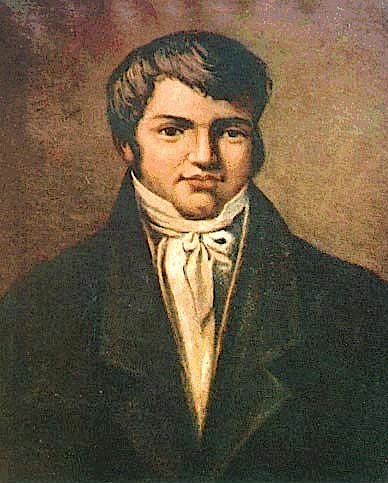
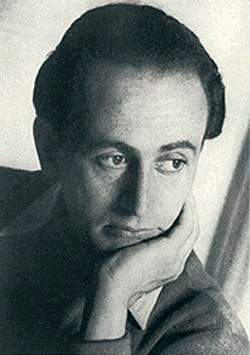
Celan, Paul was not a happy man. Perhaps that's why he was such a successful poet. He was a Romanian poet and lived 1920 to 1970. Britannica says he was largely inspired by the French surrealists of his time.

He was sent to a forced labor camp in WWII. His parents were sent to an internment camp where they both died. Britannica says his parents were murdered, but wikipedia indicates that his father probably died of typhus while his mother was shot after being exhausted while performing forced labor.

After being freed by the Red Army, he moved to Paris. Over the course of his life he wrote 9 volumes of (German) poetry. His poetry has been translated into English by various authors.

Wikipedia quotes him as saying about language:
Only one thing remained reachable, close and secure amid all losses: language. Yes, language. In spite of everything, it remained secure against loss. But it had to go through its own lack of answers, through terrifying silence, through the thousand darknesses of murderous speech. It went through. It gave me no words for what was happening, but went through it. Went through and could resurface, 'enriched' by it all.
The guy had a way with words.
Sadly, but perhaps appropriately given that he was a poet, he died by his own hand. That's how Britannica phrases it anyway. Wikipedia is less lyrical about it and says that he committed suicide by drowning in the Seine river in Paris, around April 20, 1970.


MISC:
  • cedar
    • 4 species of conifers. genus Cedrus. family Pinaceae.
  • celadon
    • East Asian vase decorated with green, blue, and gray glazes. Colors are from being washed in slip (liquefied clay) with high iron content before glazing.

Monday, May 25, 2015

Ceaușescu, Nicolae - A jerk, but not actually a vampire.


Who do you think of when you hear about a communist leader who took a functioning country and restructured it so as to cause widespread famine? Mao is the one I knew about, and he probably killed far more people as a result, but there is another. This one managed to smash up Romania:

Ceaușescu, Nicolae Take some Mao, add a cup of Stalin, and add a dash of something charismatic like Putin, and you get Nicolae Ceaușescu. Not only was he a fiendish politician, but I'm pretty sure he chose his name to be difficult to spell. Even when I copy paste the name, the computer sometimes gets it wrong.

Sometimes I wonder why successful politicians work so hard to become supreme rulers. What percentage of authoritarian leaders actually live out their natural lives? I suppose every one of them thinks that they're special.

This guy spent the 1930's working his way up through the communist party so that by the 1960's he was the one in charge. He has some good ideas (hey, kick out those damn Russians) and some bad ideas (let's centralize everything and hope we don't screw up, and let's be super hardcore authoritarian bastards because helping people against their will is what everyone wants). The whole centralization thing resulted in massive debt due to mismanagement.

So your county is massively in debt. How to solve this? How about exporting all your unnecessary luxuries like food, medicine, and fuel? This genius step in the 1980's resulted in a totally unpredictable famine. Taking a page from Governor Jim Rhodes and the Kent State shootings, he decided to fire on some protesters in 1989. The military defected, and on Dec 25 (he knows if you've been bad or good, so be good for goodness sake!), Nicolae and his wife received bullets in the head as Christmas presents.


MISC:
  • A-kue
    • A Chinese general,
  • a posteriori
    • knowledge is experience
  • Aaron
    • This was Moses' right hand man. For some reason I remember Moses doing all that stuff on his own, but apparently Aaron was supposed to have been there representing the priest class.
  • Aaron, Hank
    • For some reason, when I hear about big name baseball players, I assume they all played for the Yankees.  This one didn't. He played minor league baseball in Eau Claire, WI, and went on to play for the Milwaukee Brewers and the Braves (in two cities).
  • Abae
    • Greek town with Oracle and some ruins.
  • Abahai
    • Manchurian tribal leader who conquered China in the 1600's.
  • Abaiang Atoll
    • coral atoll of Gilbert islands
    • Discovered 1788 by Captain Thomas Gilbert (and, presumably, all the indigenous folks who were already there)
  • abalone
    • Marine snail