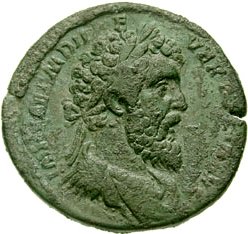
Money and politics have always gone hand in hand, but usually there is at least a pretense that it is about something else. Not so in this case.
Didius Julianus was a Roman senator who won an auction to become emperor. The Praetorian Guard killed the previous emperor and then held an auction to sell the position of emperor to the highest bidder. Didius was the highest bidder. He paid his cash and became emperor on the 28th of March, 193 AD.
His reign didn't last long. The original assassination started the Roman Civil War of 193-197 and one of its first casualties was Didius only 9 weeks after he became emperor.
This is really starting in the middle though. There were a total of 5 emperors of Rome in 193 AD. You can click through to read the gripping stories of all 5, but the first one is a fantastic example of a ruler sewing the seeds of his own destruction.
Commodus became emperor in 180 AD, but his sane rule ended when a close advocate, Cleander, was assassinated. He began to fear for his life, so he started to massacre the nobles and aristocracy. His brilliant plan was to basically get rid of anyone who could possibly challenge his rule. Of course, his actions motivated those exact people to challenge his rule. Three nobles decided they're rather live than die, so they had Commodus strangled.
Rule of Rome could get pretty exciting at times. In addition to the year of the 5 emperors, there was also a year of the four emperors and a year of the six emperors.
I read the encyclopædia so you don't have to. I bring a daily dose of knowledge which is sometimes obscure, but always interesting. A while back I splurged and paid $700 for an 8 year old set of the Encyclopædia Britannica. I'm reading it cover to cover, page by page.
Tuesday, August 4, 2015
Monday, July 27, 2015
Dick, Philip K. - Total Recall
The movie Total Recall was based on the short story "We Can Remember It For You Wholesale" by Philip K. Dick. The story was originally published in The Magazine of Fantasy & Science Fiction in April 1966.
Go ahead and click through to read about the story. It's the same story I remember in Total Recall, but the final twist is different and actually pretty compelling. I'm planning to get a copy of the story so I can read the whole thing.
Sunday, July 26, 2015
dicastery - juries used to be much larger
In ancient Greece, a dicastery was a group of 6000 citizens that formed a jury pool that was split into groups of 500. A majority vote was used to determine the outcome. A tie vote resulted in acquittal.
This sort of thing made bribery more difficult given the large number of people involved.
Saturday, July 25, 2015
dice - thousands of years old
The forerunner of dice were probably knucklebones (ankle bones of sheep) which were marked on 4 sides. Modern dice have been around for quite some time though. Dice equivalent to modern dice have been found in Egyptian tombs dating from 2000 BC.
Here is a history of dice that I can be found at awesomedice:
There are a variety of ways to cheat with dice. A "shape" is a die that is slightly rectangular. Such dice are slightly more likely to land on the longer sides.
A "loaded" die has weight added just below the surface of one side. The opposite side will be more likely to show up.
A "top" or "bottom" die has one or more numbers repeated so that certain numbers are more likely and others will never show up. Better be careful with these. You'll need good slight of hand to introduce these into a throw and then remove them before someone notices.
Here is a history of dice that I can be found at awesomedice:
![]() |
| history of dice from awesomedice.com |
A "loaded" die has weight added just below the surface of one side. The opposite side will be more likely to show up.
A "top" or "bottom" die has one or more numbers repeated so that certain numbers are more likely and others will never show up. Better be careful with these. You'll need good slight of hand to introduce these into a throw and then remove them before someone notices.
Friday, July 24, 2015
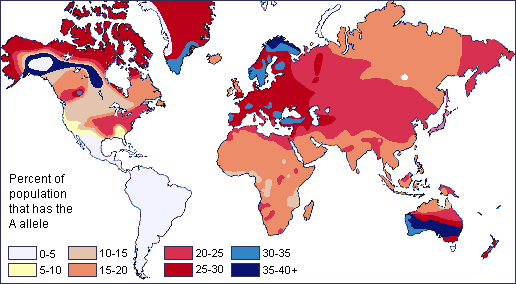
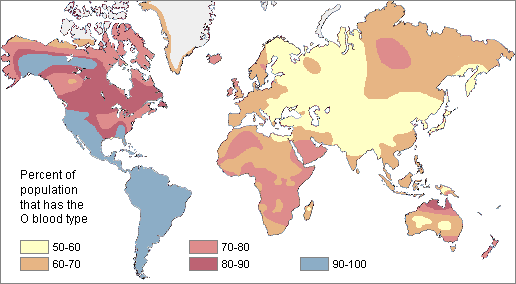
ABO blood group systems - evidence of ancient migrations
![]() |
| A allele in Native Populations |
![]() |
| B allele in Native Populations |
![]() |
| O allele in Native Populations |
Thursday, July 23, 2015
Ableman v. Booth - federal government rules all. Taney was a false literalist.
![]() |
| Roger B. Taney |
The name sounded familiar to me, but it wasn't until I read about Ableman v. Booth in Britannica that I learned that Taney made some major pro-slavery rulings during his tenure.
Ableman v. Booth was a decision that ruled that state courts cannot issue rulings that contradict rulings from federal courts. The Wisconsin Supreme Court attempted to rule the Fugitive Slave Act of 1850 unconstitutional, despite a federal ruling that it was not. The Supreme Court unanimously ruled that state courts can't do that.
That ruling has obviously stuck around, but Taney's court didn't use that opportunity to declare the Fugitive Slave Act unconstitutional.
The big one was Dred Scott, a widely derided 7-2 decision which led indirectly to the US Civil War. This ruling held that African Americans, whether enslaved or free, could not be American citizens and had no standing to sue in federal court. Furthermore, it rules that the federal government was not allowed to regulate slavery in federal territories acquired after the creation of the US.
Moral issues aside, this indirectly led to the civil war because up until this point, many people outside the south were willing to allow slavery to exist just so long as their own states didn't allow it. Dred Scott essentially made it impossible for many states or the federal government to outlaw slavery. Now, slavery was an all or nothing issue, so the anti-slavery was strengthened greatly by this.
Prior to Dred Scott, Democratic Party politicians had sought repeal of the Missouri Compromise, and were finally successful in 1854 with the passage of the Kansas–Nebraska Act. This act permitted each newly admitted state south of the 40th parallel to decide whether to be a slave state or free state. Now, with Dred Scott, the Supreme Court under Taney sought to permit the unhindered expansion of slavery into the territories.
Wednesday, July 22, 2015
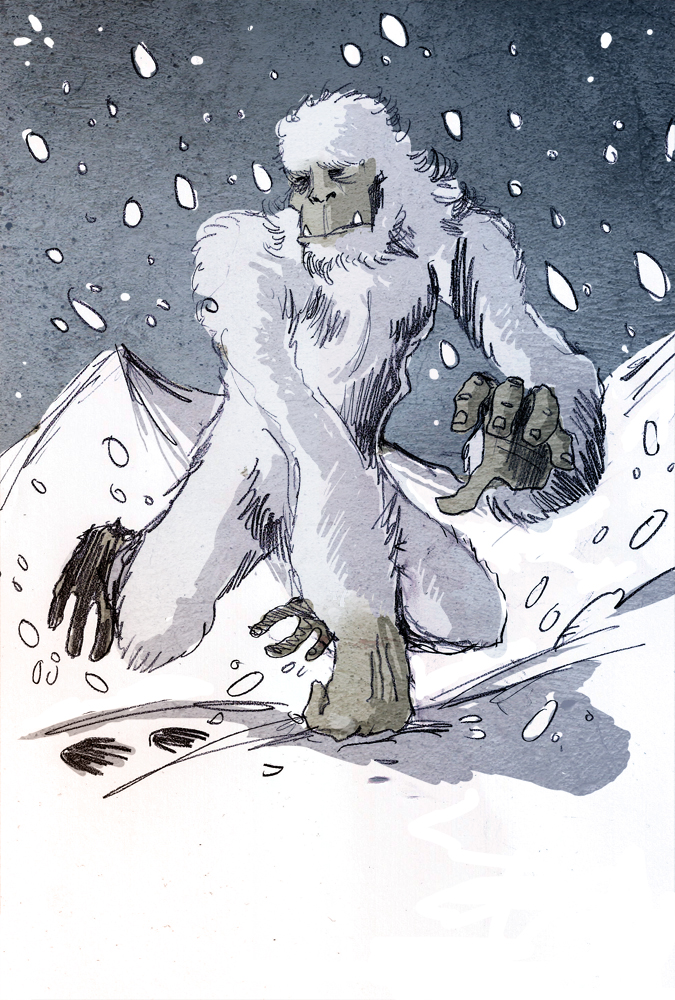
abominable snowman - a bear tale
The Abominable Snowman (aka. Yeti) has some history behind it. It's a creature that is supposed to inhabit the Himalayas at about the level of the snow line. Pre-19th century there were pre-Buddhist beliefs of some Himalayan people which involved worshiping a "Glacier Being" as a God of the Hunt.
Over the 19th and 20th centuries, many reports have been made of finding large footprints or seeing a creature in the distance walking on its hind legs.
In the 1950's, there was legitimate belief that a large ape like creature actually existed in the Himalayas. This is not really a particularly far fetched sort of idea. These weren't claims that aliens were visiting or that ESP was real, so there were expeditions sent out to try and find the creature.
As a random bit of trivia, it's funny that in 1959 James "Jimmy" Stewart reportedly smuggled the remains of a supposed Yeti in his luggage when he flew from India to London. This is the so called Pangboche Hand. Go ahead and click on that one. It's kind of a surreal story.
Ultimately, all analyzed hair samples claimed to be from a Yeti have turned out to be some other animal. However, the tracks might actually be real tracks created by bears. Britannica claims that at certain gaits, bears place their hind-foot partly over the print of the forefoot thus making a large imprint like an enormous human footprint positioned in the opposite direction.
I wasn't able to find any examples of overlapping prints making prints in the opposite direction, but this page gives a variety of examples comparing prints made by overlapping bear tracks.
Tuesday, July 21, 2015
Abell, Arunah Shepherdson (not Shepardson) - there was more than one pony express!
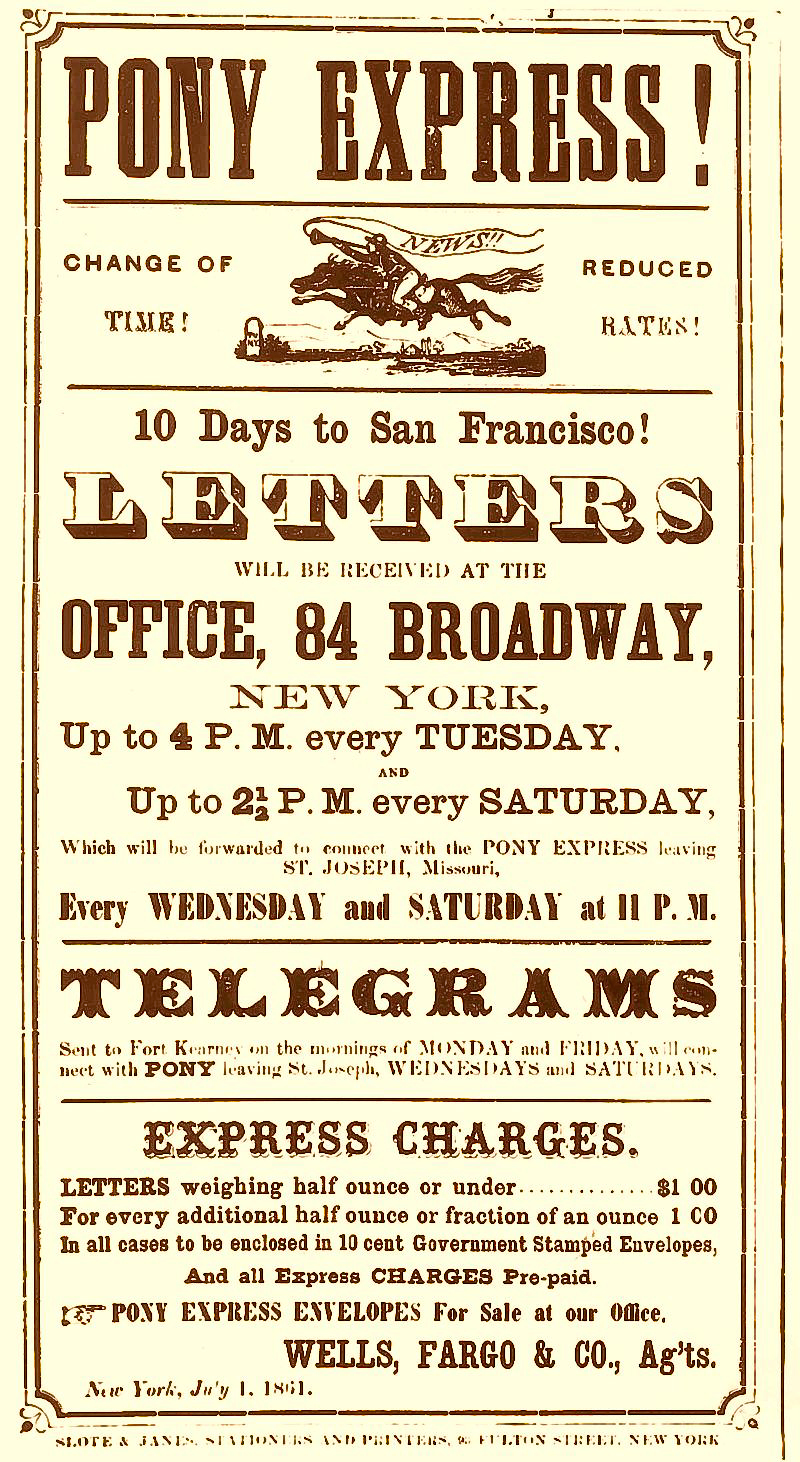
Arunah Shepherdson Abell was a publisher who set up a pony express from New Orleans. This surprised me because I was unaware that there was more than one pony express.
It turns out that there was The Pony Express (which gets to be capitalized) which delivered messages, mail, newspapers, and small packages from Missouri to California and various points in between. It reduced travel time for messages down to about 10 days. It only lasted 19 months though.
Then there were pony expresses owned by newspapers to get news out quickly in the days before the telegraph.
Monday, July 20, 2015
Deming, W. Edwards - in charge of quality control for Japan
Deming, W. Edwards had a large amount of influence on Japanese businesses in post-World War II Japan. He apparently brought quality control to Japan in 1950. The Japan Deming Prize (est. 1951) is still given annually to corporations that win quality control competition.
It seems pretty epic for one person to have so much positive influence in their chosen field.
Sunday, July 19, 2015
bear - something about pic-i-nic baskets
![]() |
| Brown bear |
| Asian black bear |
![]() |
| Sun bear |
![]() |
| Spectacled bear |
| Indian Sloth bear |
![]() |
| Syrian brown bears |
A few other notes. Bears use their feet like humans in a plantigrade fashion with heels on ground. They are good at climbing and swimming. Most enjoy honey and sleep through winter, but this apparently does not count as true hibernation. They live 15-30 years wild, but longer in captivity.
Saturday, July 18, 2015
Beaumont, William - just poke the wound and see digestion working live!
William Beaumont was the U.S. Army surgeon who, in 1822, treated the 19 year old Alexis St. Martin for a gun shot to the stomach at close range. He thought Alexis would die, but he didn't. In fact, the wound healed up in such a way that by applying pressure to the area, Beaumont was able to look right into the stomach and watch digestion as it occurred!
This allowed Beaumont to perform a variety of experiments on him over the following years. Most of the experiments involved tying a piece of food to a string and then inserting into the hole in the stomach. He would then remove the food every few hours and see how it had been digested. He also extracted a sample of gastric acid for analysis. This all led to the discovery that digestion is primarily a chemical process as opposed to a physical one.
Poor Alexis does not seem to have been an enthusiastic participant. Beaumont actually got him to sign a contract to work as a servant, so in addition to helping Beaumont perform groundbreaking research, he also chopped wood for him.
Friday, July 17, 2015
Diavolo, Fra - sometimes the encyclopedia is inaccurate
I originally started this article because Britannica's account of Fra Diavolo, an Italian guerrilla fighter, is somewhat exciting. It portrays him as a bandit who plundered the countryside and ferociously victimized the peasants before becoming a mercenary for Queen Maria.
However, Britannica's article appears to be based on inaccurate French accounts of him. The wikipedia article talk page indicates that no sources other than Britannica for the charges of banditry against him.
For example, Britannica says his nickname "Brother Devil" came about because of his victimization of peasants while acting as a bandit. Wikipedia indicates that the nickname actually came about when he was a young child acting naughty. The charges of banditry appear to be entirely made up by the French.
Nevertheless, he was quite ruthless in war. He tortured and murdered hundreds of prisoners of war, including a French general.
I'd say that this is an example of history being written by the winners, but the French don't currently control Sicily, so it seems that ultimately, the French didn't win that war.
Thursday, July 16, 2015
Diana's cult - harsh prerequisites to be the priest
Diana is the Roman goddess of the hunt, the moon, and childbirth. She is also considered the patroness of lower-class citizens and slaves.
Being a priest of Diana at Nemi had some harsh prerequisites. You needed to be a runaway slave and you needed to defeat the current priest in a trial by combat.
Once you got the post, you could look forward to a life of defending yourself from other would-be priests until you were eventually killed.
Wednesday, July 15, 2015
Diamond Necklace, The Affair of - shiny carbon assists in downfall of a monarchy
The Affair of the Diamond Necklace is actually a rather gripping tale. I suggest just clicking through and reading it in its entirety, but I'll try to summarize it.
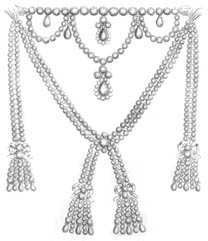
Louis XVI of France ordered a super expensive necklace (Britannica says 1,600,000 livres. Wikipedia says 2,000,000 livres.) for a woman he was infatuated with. Then he died of smallpox and she was banished from court. It hadn't been paid for yet, so the jewelers tried to sell it to the new Queen, Marie Antoinette, but she refused.
A con artist Countess de la Motte (Britannica describes her as an adventuress) conceived of a plan. She became the mistress of Cardinal de Rohan who was in bad grace with the Queen. He was trying to regain the Queen's favour and was excited when la Motte mentioned that she enjoyed the Queen's goodwill.
A fake correspondence began between Rohan and the Queen. The letters were forged, but they convinced Rohan that the Queen was in love with him. He asked to meet with her, so la Motte arranged a meeting between Rohan and a prostitute dressed up to look like the Queen.
Taking advantage of all this, la Motte borrowed large sums of money from Rohan, supposedly for the Queen's charity work. She used the money to work her way into respectable society, all the while claiming she knew the Queen well.
The jewelers decided to use her to sell the necklace to the Queen. She eventually agreed and had several fake letters from the Queen sent to Rohan, ordering him to buy the necklace. He got the necklace in exchange for agreeing to pay in multiple payments. The necklace was given to la Motte's husband who pretended to be a valet of the Queen. He then took it to London where it was broken up and the diamonds sold individually.
The jewelers eventually complained to the Queen directly about not receiving payment. The Queen knew nothing of this and as a result, all sorts of things blew up. Lots of people were arrested by the King and the whole thing was made very public. The populace was enraged that the Queen would spend so much money on something so frivolous when things were going so poorly for everyone else. This was despite the Queen's actual innocence in the matter
This degraded the Queen's reputation quite a bit and assisted in the eventual downfall of the monarchy during the French Revolution.
Tuesday, July 14, 2015
diaeresis - cooperation hiatus
Diaeresis (from the Greek "to divide") refers to two vowel sounds occurring in adjacent syllables. An example would be "cooperation" or "hiatus". Contrast this with diphthong which is a sound made with two vowel sounds in the same syllable.
Some languages have few or no diphthongs, but a lot of vowels, so they end up with lots of diaeresis. For example, the Hawaiian word "aea" has 3 syllables.
Many languages disallow this sort of thing and simply deleting the extra vowel or adding an extra consonant. Some English dialects insert an /r/ into the word. This is called the intrusive R and seems to be something that can get you elected president (see Kennedy and any president from the south).
Monday, July 13, 2015
Dhaulagiri - no love for 7th place
Dhaulagiri I is the 7th tallest mountain in the world at 8167 meters tall, but back in 1808 it was the tallest mountain yet surveyed. It wasn't until 1838 that Kangchenjunga got first place followed by Everest in 1858.
The name Dhaulagiri means "white mountain" or "dazzling white beautiful mountain". A Swiss expedition was the first to reach its peak in 1960 (that's 7 years after the first ascent of Everest).
Like most of the tallest mountains on Earth, it is located in Nepal. In fact, of the 10 highest mountains on Earth, 9 are in Nepal. The defector is K2, the second highest mountain, which is in China.
Sunday, July 12, 2015
dew - watch out for the hydrometeors!
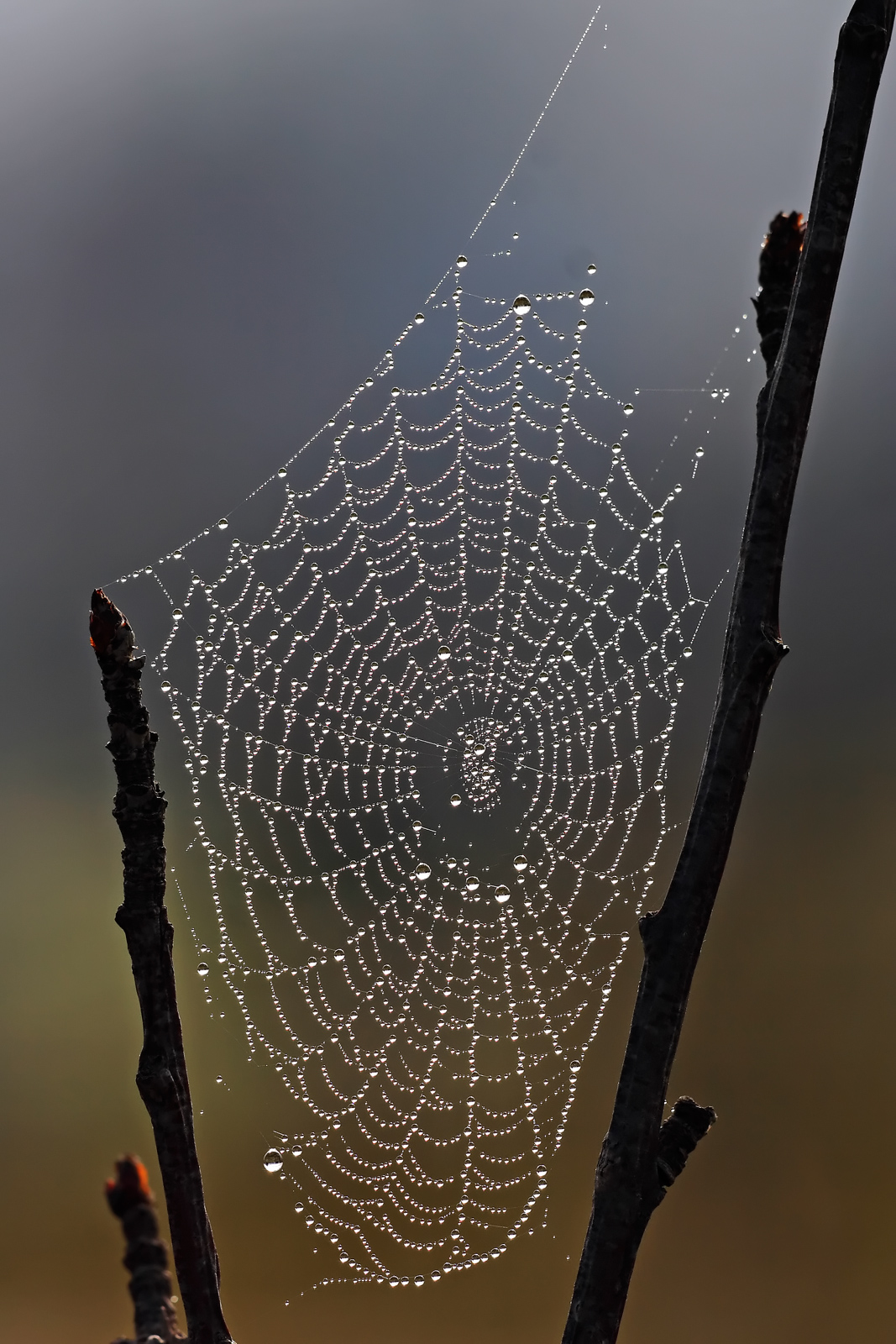
Dew forms because the air heats and cools quicker than objects in the environment. If the temperature of air is already below the dew point then you'll see clouds or fog. If the air is above the dew point, but objects like grass are cooler, then dew will form when water vapor comes in contact with grass and is cooled past the dew point.
I was delighted to encounter the term hydrometeor. It simply refers to bits of liquid or solid water in the atmosphere. So clouds, fog, rain and snow are composed of hydrometeors. This conjures images of blazing water plowing through the atmosphere, but it just generically refers to any form of liquid or solid water in the atmosphere, including snow that gets blown off the ground and virga, which is precipitation that evaporates before it hits the ground.
So, the next time you get caught in the rain or snow you can call someone and say that you can't make it because of all the hydrometeors impacting the ground near you.
Saturday, July 11, 2015
deus ex machina - a literal machine
The term deus ex machina was originally a Greek term meaning "god from the machine". Today we use it to refer to poorly written plots that suddenly solve everything using the abrupt and contrived appearance of a super power.
It turns out that it was always used to refer to poorly written plots, but it also referred more specifically to a machine used to raise an actor to portray a god in a play. The machine was either a crane used to lower actors from above, or a riser used to raise actors up through a trapdoor.
Friday, July 10, 2015
Cellini, Benvenuto - he had an eventful life
Normally I link to wikipedia, but this is one case where the Britannica article is far more interesting.
Benvenuto Cellini was a Florentine sculptor, goldsmith and writer who had a very eventful life. He was born in 1500. In 1516 he was banished from Siena as a result of a brawl. In 1523 he was prosecuted for fighting and condemned to death.
In 1527 he fled to Rome and participated in its defense during which he shot a constable of Bourban as well as a Prince of Orange.
At some point he killed a rival goldsmith, but he was absolved by Pope Paul III. But, the following year he wounded a notary and fled Rome. In 1537 he returned to Rome and was imprisoned for embezzlement. He escaped, but was imprisoned again and then finally released in 1539 at the insistence of Cardinal d'Este of Ferrara.
In 1546 he fled Venice to escape charges of immorality.
Throughout all this he completed various gold sculptures for kings, nobility, and various powerful religious figures. Despite all that, his lasting fame is mostly due to his autobiography which was not something that people normally wrote during that period.
He died in 1571. Neither article actually mentions how he died though.
I strongly recommend clicking the link above and reading the entirety of the Britannica article. I found it riveting.
His autobiography is actually available online at Project Gutenberg. I haven't read it yet, but I think I probably will.
Thursday, July 9, 2015
cellophane - Not normal plastic. It biodegrades!
Cellophane is colloquially referred to as plastic, but true cellophane is actually entirely biodegradable. It is made from cellulose which is retrieved from materials like wood, cotton, and help by dissolving them in alkali and carbon disulfide and then putting it into a bath of dilute sulfuric acid and sodium sulfate.
The process by which it is made sounds like it involves some icky stuff, but at least it's not something that'll stick around indefinitely after it gets tossed into a landfill.
Apparently the creation of cellophane started out accidentally. The Swiss chemist Jacques E. Brandenberger saw a wine spill on a tablecloth and decided to create a cloth that would repel liquids rather than absorb them. So he sprayed a waterproof coating onto the fabric which made it too stiff. But he was able to easily separate the clear film from the cloth and that led him to forget about his original intention. Instead he spent the next 10 years perfecting the film until 1912 when he constructed a machine to manufacture the film which he named Cellophane.
Subscribe to:
Posts (Atom)