Tuesday, July 7, 2015

beard worm - These are the giant tube worms guarding our heavy water.


The beard worm (Siboglinidae) is a marine invertebrate that lives in tubes on seafloors throughout the world. The members of that family used to be known as the giant tube worms (Pogonophora). The worms never leave their tubes and are usually about 1 mm in diameter, but 10 to 75 centimeters long. The tubes are composed of chitin and are secreted by the glandular forepart of the worm.

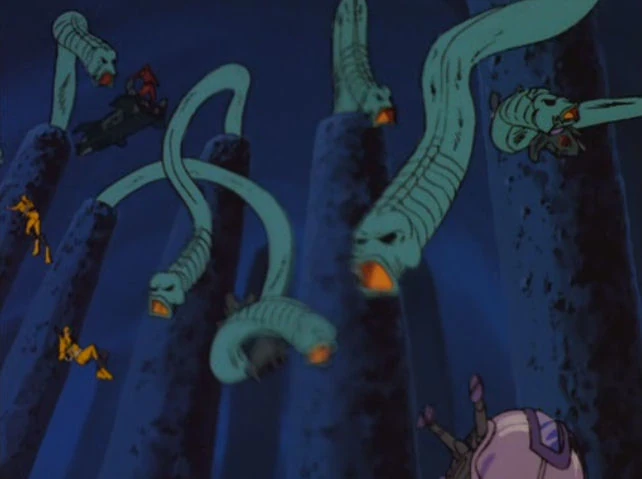
The image above is actually of the Worms of Death from the classic 1980's cartoon G.I.Joe. Below you can see what a beard worm actually looks like:


The blu-ray IMAX Under the Sea 3D has some beautiful video of a field of worms living in holes and moving with the water in unison. They aren't tube worms, but they are sort of similar. I wasn't able to find a video clip from that movie, but here's one I did find:


Monday, July 6, 2015

desert plants - sneaky quick water hoarders


Desert plants have a variety of adaptations allowing them to survive long periods without water.

Some plants only open their stomata at night to reduce water evaporation that occurs quicker when the sun is out.

Plants often have water impervious cuticles & waxy coatings.

Succulent organs retain lots of water.

South African desert covered in ephemeral annuals during brief spring wet season.

There are even ephemeral annuals that bloom only during sudden rain.

The Peniocereus Greggi blooms once a year. All plants of that type bloom simultaneously on the same night. This occurs to maximize cross pollination between plants. If they bloomed individually, there would be no one to cross pollinate with. In other parts of the world, flowers stay open for a while to give cross pollination time. But in the desert this plant doesn't want to waste energy maintaining a flower and keeping the reproductive process ongoing for long periods of time. They just get it done one night then go back to staying alive.

Apparently some people have night garden parties where they watch it bloom.

Sunday, July 5, 2015

desert processes - there's a history behind every crazy looking rock


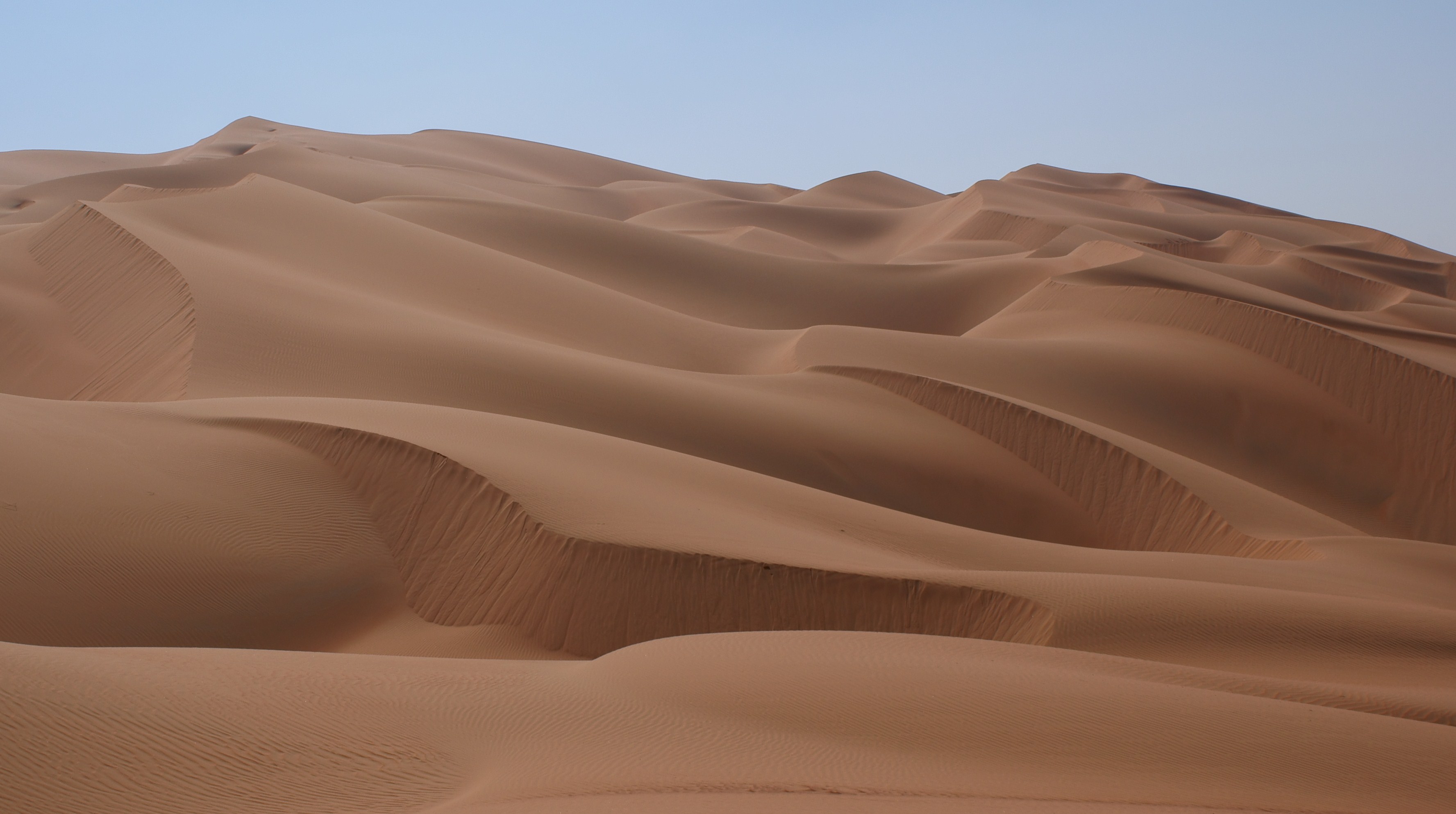
The picture above is what most people think of when they think of deserts. However, wind blown sand only makes up 2% of North American deserts, 10% of the Sahara, and 30% of the Arabian desert.

There are many processes that create geological structures. What follows is a quick selection of them, particularly ones that are in play in the desert.

glaciofluvial deposits along Matanuska River, Alaska
Fluvial processes refers to deposits and landforms created by rivers and streams. Of course, deserts generally don't have permanent rivers, but sudden rain storms do occur in deserts and that water can change the landscape.
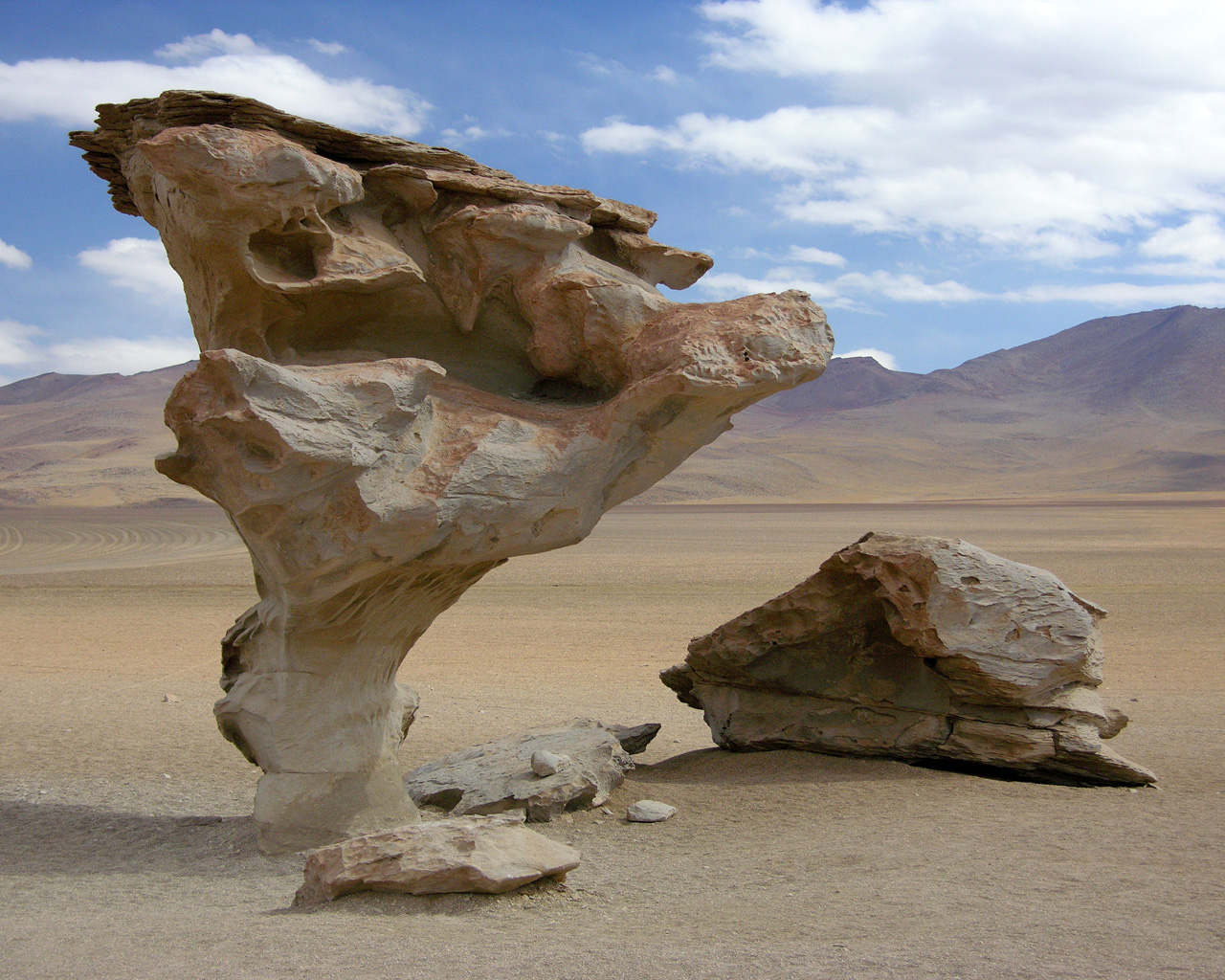
rock sculpted by wind in Altiplano region of Bolivia
Aeolian processes refer to wind's ability to erode, transport, and deposit materials.


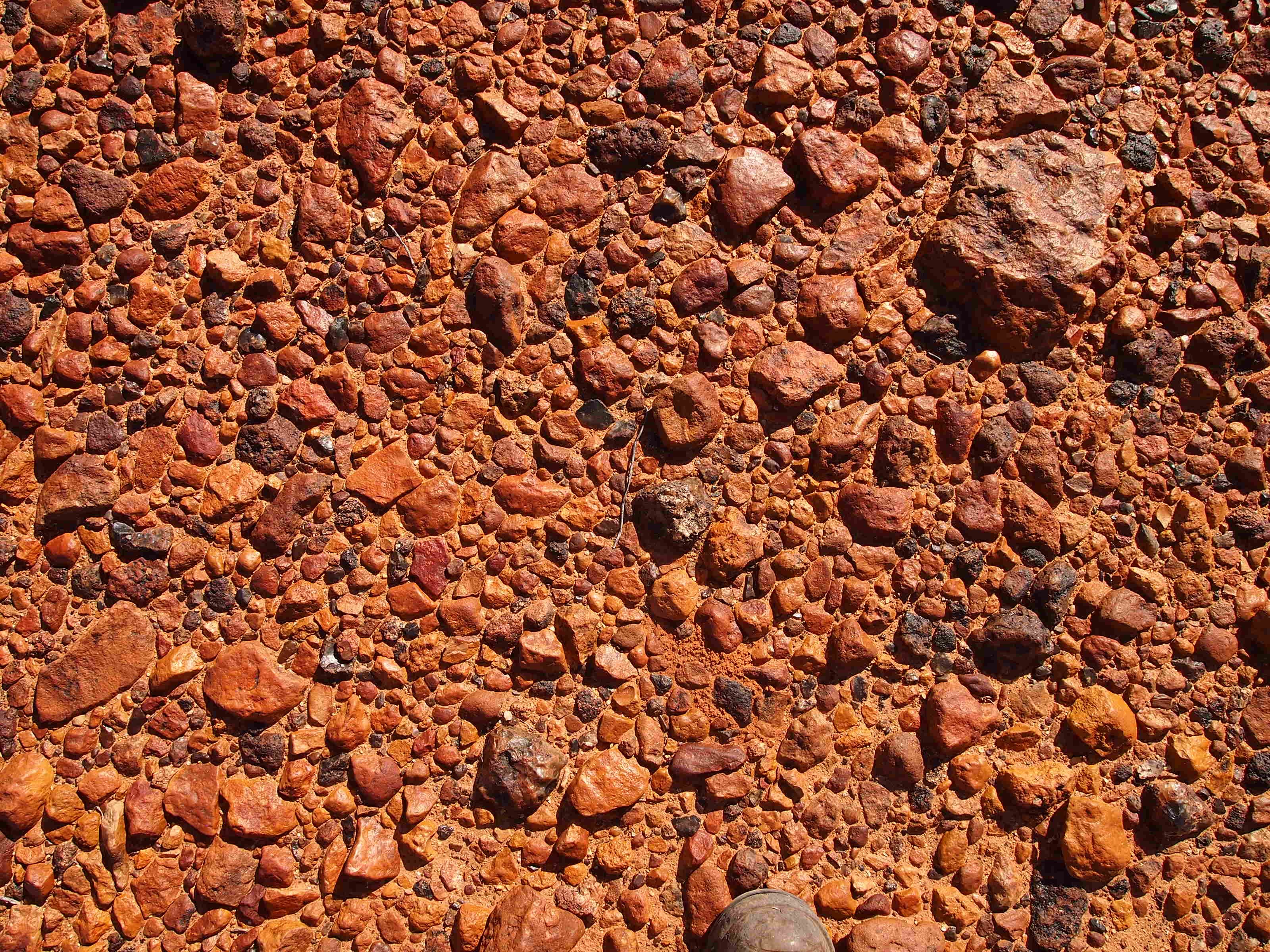
Desert pavement is a desert surface composed of interlocking rocks. It looks like the land was run over by a steamroller. There are multiple theories about how the pavement forms, but I find the most recent theory fascinating. In the given example, we start out with a lava flow then, over time, dust is deposited, but due to "heave" (which I think means shaking about by wind), all loose rocks move upward as new dust is added. The result is that helium-3 dating of the rocks shows that the dust under the rocks is actually much newer than the rocks on the top. Furthermore, there are no rocks in the dust underneath because they have all migrated to the surface.


Desert pavement is often coated in desert varnish, but desert varnish can occur on anything that sits on exposed rock surfaces for long periods of time. It only occurs in an area where there is no frequent precipitation, fracturing, or wind abrasion. However, the varnish requires wind to deposit clay on the surfaces to be varnished, so presumably that means the wind must be relatively mild.

The varnish contains a large amount of wind deposited clay which acts as a substrate to catch additional substances that chemically react together in high temperatures. Wetting by dew is also involved.

The resulting varnish contains a high concentration of manganese which is significant because it only makes up 0.12% of Earth's crust by weight, but it's 50 to 60 times more abundant in varnish. One theory for why this is involves manganese-oxidizing microbes.
Saturday, July 4, 2015

Deng Xiaoping - pretty decent for a nearly all powerful authoritarian


Deng Xiaoping is in Britannica under "De", but there is no comma after the "Deng" despite the fact that Deng is his last name. Normally, Britannica lists biographical articles by last name first like "Smith, Bob". So in this case it could have been "Deng, Xiaoping". However, because Chinese folks actually say their family names first, Britannica doesn't put the comma in. It's just "Deng Xiaoping". At first I thought this was inconsistent, but I've come to think that it probably makes sense. The comma only gets inserted when order is changed, not to separate the name.

Deng lived 1904-1997. He was a Chinese communist leader who was the most powerful figure in China from the late 1970's to 1997. He was primarily responsible for the shift to a capitalist society and for stabilizing the nation after the excesses of the Cultural Revolution. He abolished the class background system and the commune system. In 1961 he pronounced "it doesn't matter whether a cat is black or white, if it catches mice it is a good cat".

It's not all good though. He supported military suppression in Tiananmen Square. Britannica indicates that he was at first reluctant, but the wikipedia article doesn't make it sound that way. After those 1989 protests an 18 month purge was undertaken to remove sympathizers. Deng later told the Canadian Prime Minster Pierre Trudeau that the protesters could have seized weapons and that the country had risked civil war. That is kind of a weak justification though. The protests could have been quelled without killing so many people.

Still, two years later Deng endorsed Zhu Rongji as a vice-premier candidate. Zhu had refused to declare martial law in Shanghai during the demonstrations despite pressure from socialist hardliners.

Friday, July 3, 2015

Desmarest, Nicolas - Earth didn't start as waterworld.


Desmarest, Nicolas was a French geologist who lived 1725-1815. His claim to fame is that he disproved the Neptunist theory that all rocks were formed by sedimentation from primeval oceans.

Basically, the idea was that the Earth used to be a water world and that sediment settled and formed all the rocks. Of course, rocks like that do exist, but that isn't the only way that rock is formed. As it turns out, if it was, Hawaii wouldn't exist and that would be an absence too horrible to imagine. (Seriously, if you have vacation time available, go to Hawaii. There's no reason to go anywhere else.)

Hawaii
He studied basalt in Auvergne France and proved that these rocks were the result of old lava streams.

Thursday, July 2, 2015

Devonian - long years, short days

The Devonian covers the Earth's history from 419 to 359 million years ago. The world was a little different back then. The picture above shows the continents at the time. I find it essentially unrecognizable.

At the time, days lasted about 21 hours, but there were about 400 of them each year. I don't know how exact those numbers are, but that indicates 8400 hours a year compared to 8766 hours a year now. My guess is that the 400 is a rough estimate. I wasn't able to find a wikipedia article on deviation of the length of the Earth's revolution about the sun, but some quick googling turned up discussions about how the revolution about the sun is slowing, but at a very slow rate compared to changes in Earth's rotation.

The Earth's rotation is slowing over time, largely due to the dragging effect of the Moon's tides. However, there are occasional events like the 2004 Indian Ocean earthquake which increased Earth's rotation by a full 3 microseconds.

On a side note, it's fascinating that the historical view that the heavens rotate about the Earth was not without controversy. Even in the time of the ancient Greeks there were some who argued that the Earth rotated. The counterargument was that if the Earth rotated, the world would be destroyed by high winds.

The Devonian had its share of extinction intensity increases.


At the beginning of the Devonian the largest land organism was a fungus that stood 8 meters tall. By the middle of the Devonian plants developed roots and leaves, so now the land looked something like this:


The following shows the evolution of animals over geologic time. Note that the Devonian is the age of the fishes. According to this graph, before that period there wasn't nearly as much variety in the oceans. The end of the Devonian is the rise of the tetrapods.


Time goes from the bottom to the top in that graph. The width of each line shows the preponderance of that form of life during that period of time.


Wednesday, July 1, 2015

Devil's advocate - opposite of God's advocate


The Devil
Every term has an origin. In this case, the Devil's advocate was originally a canon lawyer who argued against the canonization (sainthood) of candidates. This person was opposed by the God's advocate who argued in favor of canonization.

Basically, to become a saint you go on trial and the Devil's advocate argues against sainthood while the God's advocate argues for it.