Sunday, May 31, 2015

Abbas I (Egypt) and his well dressed sequel


That's Abbas I (Egypt)  on the left and Abbas II (Egypt) on the right. I gotta say that Abbas II had some good fashion sense. The hat and the mustache are just fantastic. (This comes from a guy who generally thinks beards are far superior to mustaches.)

Abbas I was ruler of Egypt 1848-1854. He didn't really like change. He undid everything his grandfather did. He abolished trade monopolies (sounds good), closed factories and schools (not so good), and reduced the region's army to 9000 men. He also shut down the Delta Dam and opposed construction of the Suez Canal.

Despite being the grandson of Muhammad Ali, he was unable to fight off two slaves who throttled him to death.


Abbas II ruled Egypt from 1892 to 1914. He seems to have started out cooperating with the British, but over the years he started playing both sides of the fence. It doesn't seem to have mattered though because in general he had no real political power. When you're the leader of the country and you suddenly learn from Archduke Ferdinand who learned from a British Army officer that your army invaded Sudan, well, you're probably not as in command as your title would indicate.

Abbas II was somewhat more successful than Abbas I in the sense that he managed not to get murdered, although he did get hurt during an assassination attempt in 1914 about 4 months before he lost power.

He eventually retired to Switzerland and died in Geneva at age 70. Living to age 70 is a pretty good accomplishment for a semi-autocratic ruler, so I say congrats.

Saturday, May 30, 2015

A priori, this title has 14 words. A posteriori, this title may cause confusion.


A priori knowledge is what you know without having to experience anything whereas a posteriori knowledge is knowledge derived from experience (empirical evidence).

How can anyone really know anything? That's a difficult question that philosophers have pondered since the ancient Greeks. Well, probably before then, but you don't get credit for anything unless you write it down for future generations to know. Even then, if you used paper you had better hope there are monks out there that want to duplicate your stuff until the printing press comes along.

Back in college I loved thinking about this sort of thing. I took a class in Philosophy of Science (I highly recommend that class for every person who intends to vote or think.) and enjoyed it so much that I got a minor in it.

Philosophy is basically math without numbers. It's where you go when you want to get meta about anything. If you want to know the atomic weight of calcium then you should ask a chemist or a physicist. If you want to know whether to believe the chemist or physicist then you go talk to a philosopher.

Quis custodiet ipsos custodes? (or would it be Quis custodiet philosophis dixit?) Well, if you want to know whether or not to believe a philosopher, you'll just have to ask other philosophers until you are satisfied. If you're still not satisfied, you can always ask a politician. They're always happy to tell you what you want to hear.

Friday, May 29, 2015

Celan, Paul - through the thousand darknesses of murderous speech


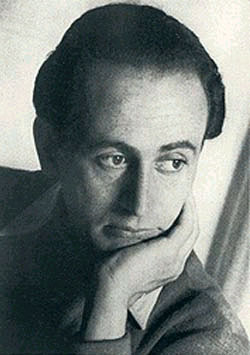
Celan, Paul was not a happy man. Perhaps that's why he was such a successful poet. He was a Romanian poet and lived 1920 to 1970. Britannica says he was largely inspired by the French surrealists of his time.

He was sent to a forced labor camp in WWII. His parents were sent to an internment camp where they both died. Britannica says his parents were murdered, but wikipedia indicates that his father probably died of typhus while his mother was shot after being exhausted while performing forced labor.

After being freed by the Red Army, he moved to Paris. Over the course of his life he wrote 9 volumes of (German) poetry. His poetry has been translated into English by various authors.

Wikipedia quotes him as saying about language:
Only one thing remained reachable, close and secure amid all losses: language. Yes, language. In spite of everything, it remained secure against loss. But it had to go through its own lack of answers, through terrifying silence, through the thousand darknesses of murderous speech. It went through. It gave me no words for what was happening, but went through it. Went through and could resurface, 'enriched' by it all.
The guy had a way with words.
Sadly, but perhaps appropriately given that he was a poet, he died by his own hand. That's how Britannica phrases it anyway. Wikipedia is less lyrical about it and says that he committed suicide by drowning in the Seine river in Paris, around April 20, 1970.


MISC:
  • cedar
    • 4 species of conifers. genus Cedrus. family Pinaceae.
  • celadon
    • East Asian vase decorated with green, blue, and gray glazes. Colors are from being washed in slip (liquefied clay) with high iron content before glazing.

Thursday, May 28, 2015

celery. Myrmidons love it.


I think celery is the first food I've encountered in Britannica. Is celery interesting? Actually, practically everything is interesting when you dig a little deeper.

When I started reading about trees that are native to North America, I found it surprising that half the trees in my yard are actually non-native trees. That makes identification harder because all the identification books I have are North America specific. None of them mention Italian Cypress trees or Avocado trees.

The same goes for food I get at the grocery store. Where did these foods first come from? Britannica says celery is "native to the Mediterranean area". Wikipedia says the first references to celery are found in 1323 BC, although there is no evidence that it was cultivated until hundreds of years later.

Homer's Iliad mentions that the horses of the Myrmidons grazed on wild celery in the marshes of Troy. (Apparently Troy was an actual real place which is now northwest Anatolia in modern Turkey.) If I was a vegetable, I'd be super stoked to be mentioned in the Iliad.

Be prepared. The following shocked me to the core:

Celery is NOT a negative calorie food! It does NOT take more calories to digest it than it provides to the body. Seriously, the web is awful at providing information about food and health. It's just absolute garbage at both those things. If you hear a fact about food on the web outside of an encyclopedia, just believe the opposite and you will probably be right. In fact, I'm not even sure that there are any true facts about food. Be skeptical!


Wednesday, May 27, 2015

Celebes black ape (photographer extraordinaire)


This fine looking fellow is a Celebes black ape (aka. Celebes crested macaque).

Britannica indicates that these beautiful creatures are arboreal monkeys from Celebes and surrounding islands in Indonesia. It also mentions that certain tribes see it as an ancestor. I'm assuming that this is not a scientific belief in evolution, although it may be something sort of like that. It's hard to say because wikipedia doesn't mention this and searching failed to turn up anything but other references to Britannica.

If anyone has details of tribal beliefs regarding this creature, please post and let me know!

Perhaps most notably, a Celebes black ape launched a huge discussion about copyright when it took the so-called monkie selfie. Strangely, despite having the decision come down on the side of less copyright, I'm not really satisfied. I personally have a strong belief that copyright should be short and far less intrusive than it is now. Yet, in this case it feels like the photographer got screwed.

In the future I assume he'll use a wireless trigger to take the photos while the monkeys handle the camera.


On a related note, spell check tells me that it is "monkeys" and not "monkies". Also, the musical band is "The Monkees".


MISC:

  • Cegled
    • Hungarian town. 2 famous speeches were delivered here. The first in 1514 by Gyorgy Dozsa and the second in 1848 by Lajos Kossuth.
  • ceiling
    • Exposed ceilings led to structural systems (e.g. pipes) which were attractive on their own.
  • ceilometer
    • Adevice which measures the height of cloud bases using UV light which reflects off of the clouds.
  • Celaenae
    • City of Phrygia (now Turkey) which was the starting point of the march of 10,000 under Cyrus in 401 BC against Artaxerxes.
  • celandine
    • poppy flower with poisonous orange sap. Once known as wartweed because it was purported to remove warts.
  • celastrales
    • Plant order, mostly trees. Has 12 families, 147 genera, and about 2000 species.

Tuesday, May 26, 2015

abbrev. snafu


Somehow, the idea that abbreviations were invented, just seems odd. But, I suppose every concept had to be thought--by someone--for the first time. We even have a name for that someone. Actually, he probably didn't invent the concept, but he appears to be the earliest user important enough to be mentioned in encyclopaedia entries on abbreviations.

Marcus Tullius Tiro was apparently a slave in Cicero's household sometime around 50 BC. Britannica says that many of his abbreviations are still in use today. Wikipedia indicates he might have been the first to record Roman speeches in shorthand.


The entry for abbreviation defines snafu as "situation normal, all fouled up". This is not the definition I had heard...

I took a gander at etymonline and it seems to indicate the term originally came from the military and was indeed not a polite term. I was wondering if Britannica did this on purpose or not (this is, after all, the entry on abbreviation, not the entry on snafu).

Nevertheless, I searched a bit, and found that the entry on slang recognizes that "fouled" is used to soften the shocking power of the term. Of course, the birds and the bees isn't just about fowl. It's about the bees too, but "situation normal, all flowerbuggered up" just isn't appropriate in polite company.


On a different note, I was just comparing the online Britannica entry for abbreviation with the entry in the paper encyclopaedia that I'm reading. The online entry isn't too much longer than the paper entry, but it certainly is a lot harder to read. It makes me sad that Britannica requires a subscription in order to get rid of all the visual clutter. If they need ads, they should be text-only google ads. OTOH, the wikipedia entry is clear of visual clutter, but it's about 6 times longer. That's great for research, but it's not great when you're just looking for an overview into all the world's knowledge.

I can't decide if the first paragraphs of a wikipedia article are enough. They are summaries. Reading just that text might be enough, but paper Britannica is a compromise between a summary and a full detailed wikipedia entry. I guess future encyclopaedia readers will have to make do. Someone should create an app that allows you to page through wikipedia, a-z, excluding non-notable articles, displaying just the summary text. Heck, maybe I'll make the app if it doesn't already exist. Sounds like a good project.

It would probably be more useful than my mymindblewup.com website which allows you to learn important facts like how many cows are required to bridge the gap between the Earth and the moon.


MISC

  • Abbate, Niccolo dell
    • Artist in 1500's France. Principle contributor t othe Fountainbleau style.
  • Abbe, Ernst
    • 1800's German scientist. Improved lenses. Discovered "Abbe sine condition" formula which is used when making lenses. Improved microscopes.
  • abbess
    • Female abbot.
  • Abbeville, South Carolina, USA
    • Cradle and grave of the confederacy.
  • abbey
    • A set of buildings built around a monastery. Basically small town.
  • Abbot, Charles Greeley
    • In 1953 discovered connection between solar radiation and long term weather patterns.
  • Abbot, Bud and Costello, Lou
    • Comedy act. They originally operated burlesque houses. Well known for "Who's on First." skit.

Monday, May 25, 2015

abacus - simple as 123... 456789


The abacus is far simpler to understand than I imagined before. For some reason I always assumed the abacus was like roman numerals or 5 count hash marks (where you make 4 vertical lines and then a diagonal 5th for every 5 you count).

It's actually very simple. Each vertical row of beads is a single digit. The beads on the bottom are worth 1 each. The beads on the top are worth 5 each. The bottom and top aren't separate, they are added together to form a single digit.

The pictured above is a Chinese abacus. There are many different types from all around the world. The Russian abacus just has 10 beads for each column rather than having separate beads for ones and fives.

Check out this simple simulator for a Chinese abacus. Just click on the beads and it should become crystal clear exactly how it all works.


MISC

  • Cecchetti, Enrico
    • Italian ballet dancer and teacher.
  • Cecil (of Chelwood), (Edgar Algernon) Robert Gascoyne
    • Cecil, 1st Vicount - British politician against Japan & Nazis before that was cool.
  • Cecil, William; 1st Baron Burghley
    • Honest adviser to queen Elizabeth in 1500's.
  • Cecrops
    • Greek. First king of Attica.
  • cecum
    • 1st part of large intestine. Larger in plant eating animals. Smaller in meat eaters. Contains bacteria to digest cellulose.